Online Services

Tag: Social Media

  • Instagram for Business: 13 Tips and Tricks for Small and Medium Businesses

    Instagram for Business: 13 Tips and Tricks for Small and Medium Businesses

    Do you know how to use Instagram for business?

    This article will learn you how to use Instagram to increase your traffic, business awareness and measure your efforts.

    Previously, it was thought the brain takes approximately 100 milliseconds in processing images and visuals. But alas!

    Recent studies from MIT now provide amazing evidence of the brain power!

    13 milliseconds is now the new number!

    In 13 milliseconds, your brain has already identified and placed an image; that’s essentially the blink of an eye, suggests the reort. And yet, you wonder why they compare an image to 1000 words.

    The ability of the average human medulla to easily understand an image makes them so effective in marketing, more effective than using a combination of long words.

    Facebook has for so long been in people’s mouths that few witnessed Instagram slowly overtaking its bigger sister. It’s a waste of time elaborating what Instagram is, the assumption being you are already in the light.

    In order to shorten a long explanation, Instagram is the in thing for a majority of youngsters. If you’re looking to be seen, if you’re there to see, if you’re just there to pass time, or peruse markets for different products, or if you just want to be entertained – look no further!

    So why is your business not on Instagram?

    You think it’s hard?


    Allow us to walk you through its simplicity offering you such easy tips that next time you join us – it will be all gratitude in the comment box!


    1. You Need to Be a Member


    instagram


    First things first, you need to sign up for an Instagram account for your business.

    Easy and what’s more, it’s totally free!

    • Download the app on App Store or Play Store according to the device in your possession.
    • Sign up with your email address or log in with Facebook.
    • Scroll down and switch to business account option
    • Add your business info as it relates to your operations.


    2. Username, Profile Picture, and Bio


    vans instagram profile


    Why have we listed this as a major point on its own – simple, it’s what defines you!


    The username should as much as possible equalize other usernames on your different platforms.


    You don’t want to mix up your clientele and make it hard for them to find you. Remember, in as much as you are on Instagram, seek to boost your influence on other platforms like Twitter and Facebook too.


    Let it also feature your business, either your business name or some product you offer. Just don’t let it be out of context.


    The profile picture should captivate and create interest. If possible, let it be as original and real as your business is. It might even be your own logo.


    Instagram profile pictures are a maximum of 110 pixels, but you can choose larger and clearer snaps that appear larger on the web.


    Last and best, your bio section is what ultimately attracts or pushes away your audience.


    It should be particular and define what you do in short, simple words.


    Remember that in this section, you are only awarded a maximum of 150 characters. You definitely want to maximize this.


    If possible, include hashtags that lead to your business or related products and associates.


    3. Drive Traffic to Your Site


    An Instagram account, especially a business one, is made for people. Don’t personalize it and relax.


    You need to be constantly leading people to your site – this is your potential market.


    Create messages on different platforms featuring your Instagram handle. You elevate your pitch if you have iconic figures in your page.


    Popular artists and well-known people could act as the boost your business needs, seek them.


    You can do this with a set of pre-set goals. Your goals could be anything like

    • Generate traffic
    • Brand awareness
    • Increased sales
    • Customer satisfaction
    • Attract quality talent


    The list is endless; so what are your goals so far?


    4. Brandish Your Content Strategy


    Now, we need to create amazing content. Take note as this will determine whether you keep your following or they walk away from you like a plague.


    • The number one no-no for Instagram: don’t overburden your followers! You ought to keep them posted, but once you keep them too posted, you lose taste. Too much of something is poison, after all (posts included). Keep it at a minimum of once or twice a day.


    • Differ in your content themes.


    You give the same story in the same format, day in day out, you’ll be left with less than 20 friends following you, your extended family included. Keep it juicy!


    • Have a guideline for the style you opt for.


    If your audience allows the use of emojis, play around with them only in relation to the content uploaded. For your photos and images, you want your clientele to recognize your formatting. Therefore, it is crucial to have a specific styling that defines you, distinct and consistent in every post.


    • DO NOT automate your engagement with your audience as this greatly depersonalizes your profile.


    You need to connect with your audience on a personal level, and in a manner that they feel drawn closer to your cause.


    As Lucas Cappel, editor of edubirdies.org put it, “The best thing you can do is hire a personnel manager or a content editor to handle the comments and any questions arising from your posts!”


    5. HASHTAGS! HASHTAGS! HASHTAGS!


    Be creative in coming up with hashtags that identify with your brand.


    This increases your discoverability on social media sites and search engines. Be original! If you mimic others’ strategies, you stand to lose a number of followers out of lack of authenticity.


    Whether you’re in the business with China made products or local made original stuff, you need to be original with your content and hashtags alike.


    If you need inspiration for your hashtags, try a social media monitoring tool with a context feature.


    Check the rankings of the most popular words in your project to give you an indication of what to use.


    unamo monitoring social media word cloud


    It allows you to check what other words or hashtags are most commonly used in connection with your hashtags.


    unamo monitoring social media word ranking


    It could mean, they’re related to your content.


    Unamo SEO free trial


    6. Stories, Photos, Captions, and Video Albums


    video marketing


    Every business has its risks.


    Incorporating live broadcasting features and disappearing content in your marketing is one such risk. If you take this route, have new and exciting stories to tell your audience, day in day out.


    These can either come in form of words, videos or really captivating photos with descriptions, just like WhatsApp.


    Do not reject the power of a captivating caption under an enticing image.


    It just acts as the perfect steroid to complement your strategy. Make your captions short and let them be the eye opener to explain whatever’s behind the scenes. Remember one’s understanding of a certain image may differ highly from another.


    Hence, a short explanation of why the image was used makes sense.


    7. Monitor your efforts


    You should monitor your efforts! It’s simpler with a Business Account.


    insights instagram


    Haven’t got a Business Account yet? No worries!


    Just connect your Instagram profile with your Facebook fan page.

    You can also use social media monitoring to track every mention and comment that is related to your account on Instagram.


    Unamo Social Media Monitoring allows you to track your profile activities with a unique feature inside the tool.


    unamo social media profiles tracking

    unamo social media profiles tracking

    You will never miss a comment again!


    8. Instagram Ads


    A business account allows you to promote your business with ads too.


    Learn how to create visual and text ads for your business page. Instagram ads are diversified and might come in the form of:


    1. Photo ads – Usually a photo with a description and call to action.
    2. Video ads – Since 80% of the time on the internet is spent watching videos year in year out, they make for a pretty good marketing and promotion option for businesses.
    3. Carousel ads – Allow users to swipe through a variety of photos or videos with an appealing CTA leading back to your website.
    4. Story ads – Discussed previously, these disappear after 24hrs and would be most effective to a business offering time-limited offers and promotions. As if that’s not enough, face filters and video effects can be incorporated to enliven the ads as the stories are told. Combine a swipe up option where a CTA is linked.


    Canvas story ads – With canvas templates easily accessible on Facebook, it’s much easier and faster to custom make them for Instagram use.


    In creating ads, some processes need to be followed.


    This starts by identifying your objectives and goals which will generally help you plan. Then you mark your target audience by identifying what they directly associate with.


    You can then select and edit your ad placements and choose your schedule and budget.


    9. Don’t Be Too Obvious


    content idea


    It is important to recognize your market.


    If you are on Instagram, your biggest market is probably the younger generation who like it – spicy and fun. To that effect, you need to eliminate direct promotion strategies and pick up tactics that play around with your customers’ minds.


    Don’t show it too openly; they know that you are a business and probably even know your product. Have diverse ways of staying relevant and afloat with the competition.


    10. Host Contests


    gift-bags-2067663_1920.jpg


    Another means of staying relevant is having frequent contests with different prizes.


    Human nature is said to be highly competitive, and as such, you are only sure to have your word spread out, especially if you are faithful in your awarding system and publicize it.


    11. Peak Hours


    Positionly Refer-a-Friend Program


    You don’t just wake up one day and decide to post.


    Recognize the hours that you generate the most traffic and optimize on this. Reports show that a majority of US citizens are logging into their Instagram accounts around 1-2am in the morning and 5-7pm in the evening; essentially, when going to bed and when returning from work respectively.


    Work with these hours for a better experience. However, it doesn’t mean that you should only post at these hours.


    12. Track Your Progress


    You need a daily reference on your daily progress.


    A number of apps have been introduced to do this. A pretty exclusive analytical tool to keep check on the likes and comments you’ve received so far is Iconosquare (formerly Statigram).


    Essentially, you get to easily track your performance with time and know what to change and what to retain. Join platforms such as Ink361, an Instagram tool to stay engaged with the audience, find new followers and impact further on your photo-sharing.


    13. Stupendous Clips and Snaps


    This probably falls as the most important factor to consider without necessary lessening the validity of the rest. If you want to keep your people stunned, don’t just use images and clips, make them as amazing as you possibly could.


    The quality of an image goes a long way to either attract or shove off. Thus, you need to focus on your photography skills: the angle, the camera used, the lighting and finally, the editing and filters. Be unique with your quality too. In reference to edits and filters, make use of the ones provided already by Instagram.


    If not sufficient, other apps and sites that could come in handy include inkwell, PicMonkey, Color Splash, Lumie, and Meme Generator for the entertainers.


    Conclusion

    A 2014-emarketer research indicated a dominance of 16.1% of Instagram users on the internet.


    The same report pegged the US smartphone Facebook users at a rough 123.7 million that very year. Twitter hippies, on the other hand, dominated 17.6% of total internet users.


    Currently, Instagram has proudly overtaken both Twitter and Facebook, and by far. In that light, we don’t need to put more emphasis on the power of this social-business platform, get to be your own judge.


    What tips do you have that are not mentioned in our list of 13?


    Join us in the comment box.

    The post Instagram for Business: 13 Tips and Tricks for Small and Medium Businesses appeared first on Unamo Blog.

  • Improve your Real Estate Social Media Strategy in 7 Days

    Improve your Real Estate Social Media Strategy in 7 Days

    The good news:

    Most home buyers still need the help of a real estate agent to buy a home.

    The not so good news:

    Unless you’re selling a home to your grandma, everyone starts online. Gone are the days when yard signs attracted potential buyers to your open house.

    That means that you need a website that converts. Plus, you need a great real estate social media strategy that generates leads.

    Want more good news?

    Setting up a winning social strategy to help you sell is fast and painless. All you need to know is where to start and what to do.

    That’s why this article will show you:

    • How to choose the 5 best real estate social media networks for your agency.
    • 7 tips that can help you improve your real estate social media strategy in 7 days.
    • How to use real estate social media management to track your success.

    Once you’ve got a strategy, it’s time to start tracking your success. Use a social media management tool to help keep track of your campaigns and listen to the whole conversation.

    unamo social media management

    Try Unamo Social Media today! Our tool is fast and easy to use, and free trials are available!

    The 5 Best Real Estate Social Media Platforms for Your Agency

    Here’s a shocking statistic – over 74% of buyers from all generations used the Internet to search for a home in 2017. Of buyers 37 and younger, 56% found their homes online. That’s also true for 51% of buyers between the ages of 38 and 52.

    The first step in the buying process is to look online. As a result, 63% of buyers walk through a home they’ve viewed online.

    The bottom line? You need a solid online and social media presence if you want to stay relevant in today’s real estate market.

    But where should you start? You’re probably too busy selling houses. You don’t have time to tweet all day and upload professional photos of your properties to Instagram.

    That’s why it’s important to take baby steps when you’re just starting. Ask yourself the following questions:

    • How many platforms do I have the time and money to manage?
    • Where is my audience and which platforms would best serve them?
    • How often can I make real estate social media posts?
    • How will I integrate different channels and my website?
    • Do I need tools to help me with scheduling, posting, and tracking?
    • How will I track my success and adjust my social media marketing strategy?

    Let’s say you only have time to manage and run one social media profile.

    In that case, go for Facebook. The platform is the most flexible in terms of use. You can engage with your audience with a variety of content, track your success, and advertise.

    Targeting Millennials? They now make up the majority of home buyers at 36%. Perhaps you should be on Instagram.

    Here are the top five social media marketing platforms to consider for real estate social media:

    • Facebook
    • Twitter
    • Instagram
    • YouTube
    • LinkedIn

    You don’t have to choose them all. Decide where you want to be and what you have time to manage. You can always expand later.

    Facebook Social Media for Realtors

    First, Facebook is the best social media platform for keeping important information in one place. Think of it as an alternative to your website.

    Make sure your contact information is consistent with your website and Google My Business Page. And make sure that it is easy for clients or buyers to contact you. Why?

    Buyers still purchase their homes through agents. In fact, 87% of all buyers purchased through an agent in 2017. That figure jumps to 90% of Millennials. You want to make sure that your Facebook page makes it easy for buyers to contact agents.

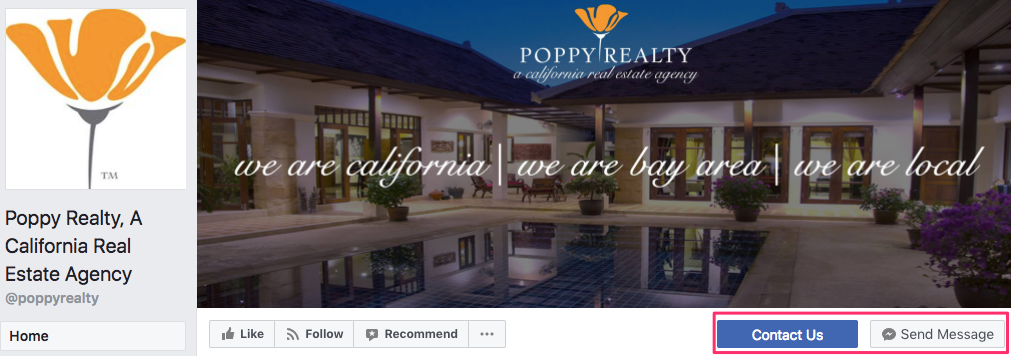
    Setting up a Facebook Business page allows you to add a Call to Action (CTA) button like the “Contact Us” button in the example. CTA buttons can help clients book agents, turning your Facebook page into a lead generator.
    Facebook real estate social media

    Next, you’ll want to make sure that your cover image is adding value to your page. Facebook has now made it possible for you to include video and 360-degree images as cover photos. Your cover image is the first thing that visitors see, so you want to make a good impression.

    In the example below, Focus Real Estate has added a dedicated hashtag (#focuseffect) to their cover image. Dedicated campaign hashtags help you track your real estate social media marketing efforts.

    real estate social media dedicated hashtag

    Here’s another example of a cover image with a dedicated campaign hashtag for @properties, a real estate brokerage in Chicago, Illinois:

    facebook real estate cover image

    They’ve created a dedicated hashtag #thelifeweshare. Here, you can see how often people used the hashtag in real estate social media posts:

    real estate social media management

    You can filter out your posts to see how many people are using your hashtag, who is using it, and how they’re using it. When you track dedicated hashtags, you can also see:

    • Reach
    • Sentiment
    • Demographic Data
    • Influencers
    • Estimated Ad Spend
    • Related Keywords

    And the list is not exhaustive. Using a social media management tool is a great way to make sure you’re efforts are successful.

    When it comes to images, the more professional the photo the better. You should consider hiring a professional photographer.

    Let’s say this is not a possibility.

    The next best thing is to make sure that you are at least posting images that you have taken yourself. Don’t be tempted to use stock images. People want to see actual homes online before looking at them in real life.

    real estate social media images

    Note the people in the example. Having people pose in your images helps home buyers imagine themselves living in the home you’re selling. The same is true of real estate social media video content. Besides drone footage and virtual tours, consider staging a home with actors to activate viewers’ imaginations.

    Finally, you’ll want to consider what features to add to your profile. Allowing clients to post testimonials or reviews is a great way to build trust. When choosing an agent, home buyers want someone who is honest and trustworthy above all else.

    Here’s an example of different pages Colorado Realtors chose for their profile:

    Facebook cta for real estate agencies

    A quick side note – notice that the copy for the CTA is different than what Poppy Realty chose. Whether you choose “Contact Us” or “Call Now,” make sure your copy reflects the resulting action. Consider using “Book an Agent” to make the experience as seamless as possible.

    In the sidebar, Colorado Realtors have chosen to include:

    • Events
    • Homes for Sale
    • Reviews
    • Videos
    • Agent Profiles
    • Featured Listings
    • Community
    • What’s Your Home Worth?

    Most of the above are obvious. “Homes for Sale” are listings. “Reviews” are reviews. But what about general real estate social media content? What should you post in your main feed?

    When creating content for real estate social media posts you’ll want to follow the 80/20 rule. You’ll see this piece of advice everywhere. The idea is that 80% of your posts should focus on customers and 20% on your business.

    What does that mean?

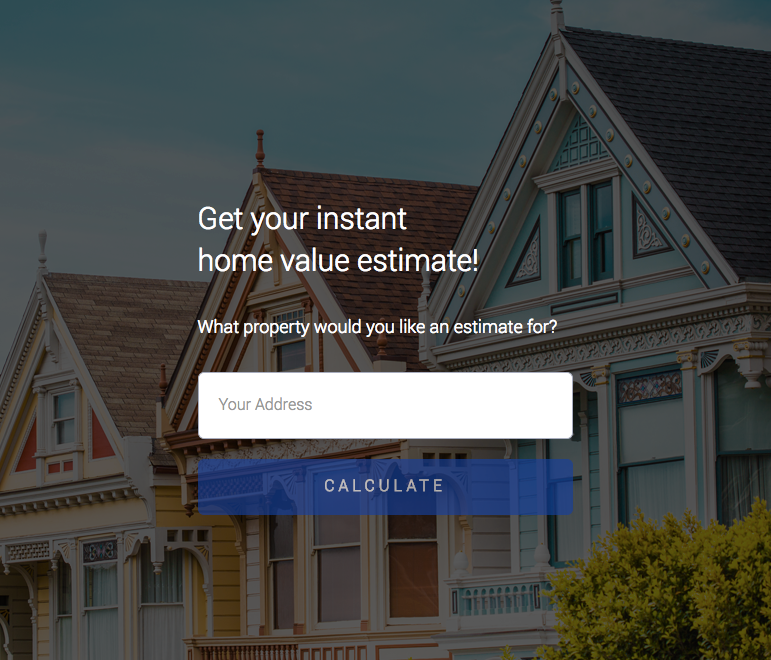
    First, look at the “What’s Your Home Worth?” feature on Colorado Realtor’s profile. It’s one of the less obvious pages. Here’s what you see when you click on the tab:
    real estate features for facebook

    Here, users can calculate the value of their property based on their address. It’s useful, informative, and interactive. Now, no the feature is not a real estate social media post. Yet, it exemplifies the type of information found in customer-centric content.

    Here are some real estate social media post examples for your main feed:

    Posts for Customers

    RIGHT

    Real estate buying and selling tips for those with no experience.

    Here’s an example of an infographic that Poppy Realty published. The content shows when different age groups can expect to buy a home:

    facebook advice for homebuyers

    WRONG

    Stock images of properties with pushy sales copy.

    In the worst case scenario, at least tell your audience that you’re using a stock photo:

    bad real estate social media post ideas

    Posts About Your Business

    RIGHT

    Progress that has been made on an ongoing construction project.

    When you’re a larger company that builds homes, creating commercial real estate social media posts that update clients on projects is a great idea:

    commercial real estate social media post

    WRONG

    Advertisements that your followers might have missed.

    When you’re one of the big players you may have millions of listings. In that case, such a post makes sense. Otherwise, don’t turn your real estate social media posts into advertisements:

    bad facebook advertising post for realtors

    Other content that is great for real estate social media posts:

    • Posts about what is happening in and around the community.
    • Showcases of local businesses and neighborhoods.
    • Contests and giveaways – great for engagement.
    • Video walkthroughs of new homes or neighborhoods.

    Pro Tip: Make sure that you set up your Facebook profile as a Facebook Business page. That’s because personal profiles don’t allow for features such as a CTA button. You also can’t add extras in the left-hand sidebar – e.g., testimonials or events.

    Want to read more about optimizing a Facebook Business page for your real estate agency? Check out our guide: 7 Simple Tips to Optimize Your Facebook Business Page

    Twitter Social Media for Realtors

    Twitter can be a bit more personal than Facebook.

    With Twitter, real estate agents can create personal profiles and use them for work. Facebook ends with the company’s profile, but Twitter can extend to individual professional profiles.

    Here are some reasons why agents may want to manage their own Twitter real estate social media posts:

    • To establish themselves as thought leaders.
    • To stay in touch with their personal clients.
    • To send out necessary, frequent updates about their properties.
    • To build trust with clients by sharing more personal tweets.

    Here is Jasmine Botto’s Twitter profile. Jasmine is part of the Botto Real Estate team in North Vancouver.

    realtor twitter profile

    Jasmine tweets listings and advice for buyers and sellers by adding links to Botto’s newsletter:

    At the same time, her Twitter profile has personal touch. Jasmine keeps it light by occasionally posting about something other than real estate:

    Meanwhile, you still want a Twitter handle dedicated to your agency or brokerage so you can generate leads and update clients with time sensitive information fast.
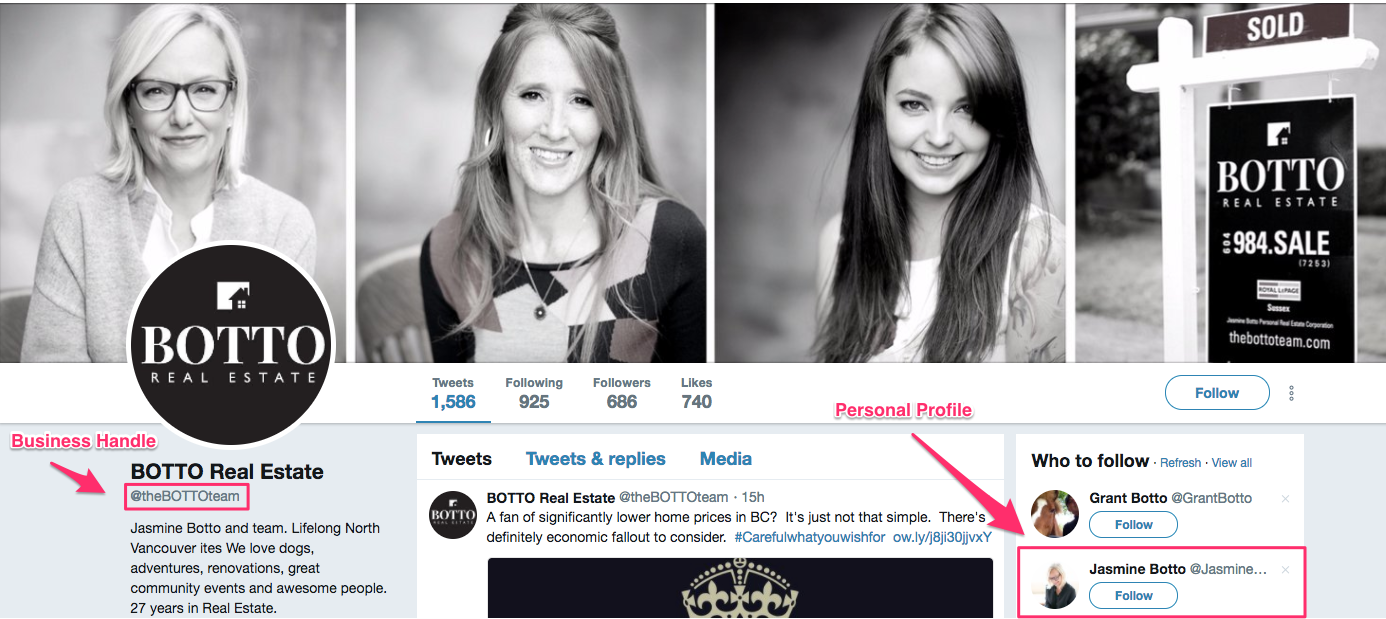
    real estate agency twitter profile

    Here are some real estate social media post ideas for Twitter:

    • Listings for properties with images or videos.
    • Tips and advice on topics like moving or staging.
    • Links to industry-related articles or your blog.
    • Retweets of content from industry thought leaders.
    • Information about events and initiatives.
    • Replies to any tweets left on your page.

    Here’s an example of listing tweeted by NYLA Real Estate, an agency based in Los Angeles:

    So, how often do you need to tweet? Here’s the thing about Twitter. To make the most of the platform, volume is important. That means you need to tweet several times throughout the day.

    The more you tweet the greater your reach and exposure. The greater your reach, the more leads you generate. If you don’t have time to make regular tweets, consider using Buffer, a post scheduling tool.

    Okay, so your profiles are set up and you’re tweeting on a regular basis. What’s next? How do you take real estate social media Twitter strategy to the next level?

    • Connect and engage with local businesses, brands, and influencers. Make yourself recognizable in the community as the go-to person for buyers and sellers.

    To find influencers, you can use a social media monitoring tool and a set of targeted keywords. For example, using the keywords “real estate” and “luxury homes” we found the following influencers:

    real estate social media influencers

    Now, most influencers will probably be other real estate agents. What can you do with this information? It’s great for competitor research.

    You could still run across an Instagrammer or a media source that could promote your content or share your real estate social media posts. Reach out and start a relationship!

    • Set up keyword alerts so that you know when someone is buying or selling a home in your area. You can use this to generate leads.

    You can set up Twitter keyword alerts through a tool like IFTT or by using a social media monitoring tool. Just add keywords (buying home/ selling home) or hashtags like #homeforsale + [Your City] to find out what’s happening in your area.

    Here’s an example using Unamo Social Media:

    real estate social media keywords

    Here’s an example of a tweet found via Unamo using #homeforsale. The home owner has renovated his house and is ready to sell in Georgia:

    But how do you know which keywords or hashtags buyers and sellers use? Some may be obvious, others not so much. That brings us to the next point.

    • Research and use real estate related hashtags. The same applies if you have an Instagram account.

    To research hashtags, try using a free tool like Hashtagify. The tool allows you to check if a Twitter hashtag is popular and find related hashtags.

    For example, #realestate has a score of 76.4, which means it’s popular. You might want to work it into your real estate social media content. Related Twitter hashtags for #realestate include:
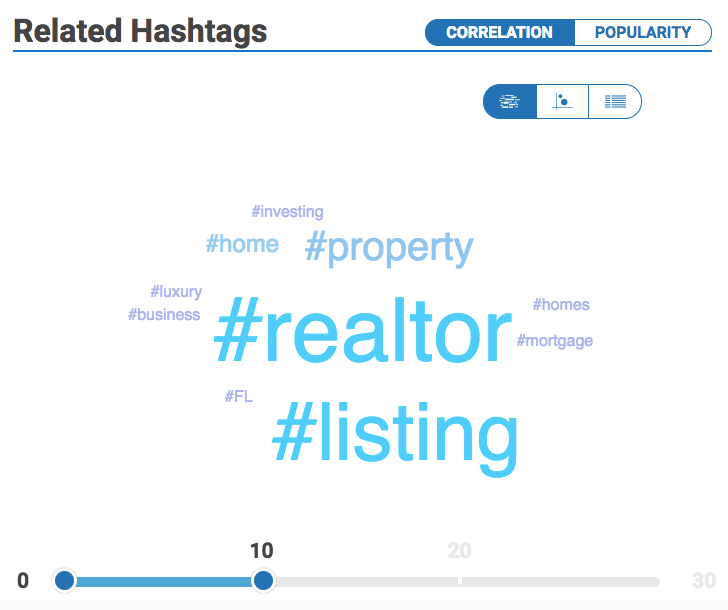
    hashtagify related hashtags

    Source

    You’ll also want to include hashtags for geographic areas where you operate (#FL), recent events (#openhouse), and search keywords for your target market (#listing).

    Using relevant hashtags in your real estate social media posts helps people find you. As mentioned above, you can also search for hashtags on Twitter to find potential homebuyers. Plus, tracking dedicated or branded hashtags can help you monitor the success of given campaigns.

    In the example below, the NYLA Agency has used three hashtags:

    • A Dedicated/Branded Hashtag (#NYLAagency)
    • A General Hashtag (#TheDreamTeam)
    • A Real Estate Hashtag (#RealEstateExperts)

    Pro Tip: Want to post a link to your blog or an article? Does the link cause your tweet to exceed the 280 characters limit? Use a link shortening tool like Bitly to compress your links. That way you have more room to write a CTA or engaging copy in your tweet.

    Did you know that you can use SEO techniques to increase the visibility of your Twitter profile? No? Want to find out how? Read our article: 7 Twitter SEO Tips: Leverage Your Social Presence for Better Traffic!

    Instagram Social Media for Realtors

    With Millennials taking over the home buying market, you can’t afford to overlook Instagram. Plus, as a photo sharing app, it’s a perfect place for real estate social media posts that contain images of properties.

    There are two important things you need when using Instagram – beautiful images and appropriate hashtags. Again, do not use stock images. It’s better to take amateur photos with natural filters than to try to post fancy stock images.
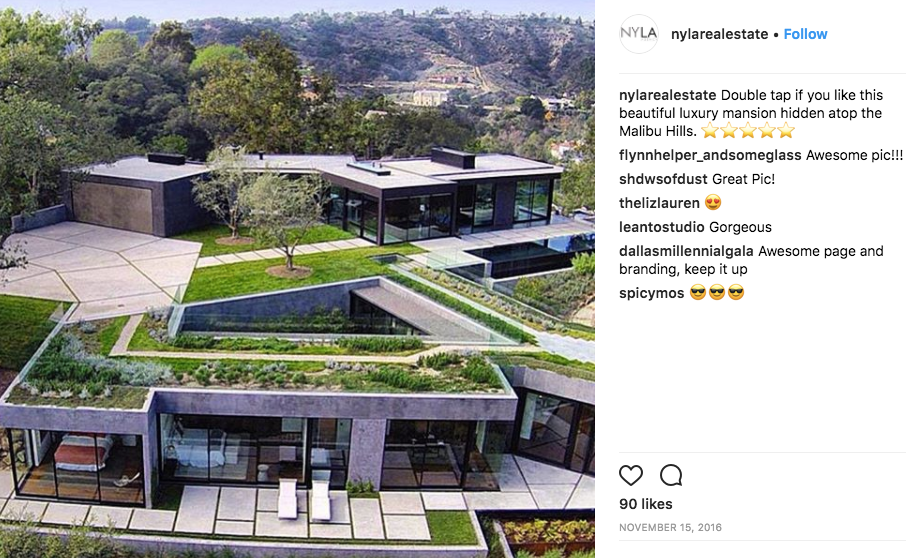
    Instagram real estate social media

    When it comes to choosing hashtags, you want to use a mix.

    • Popular Instagram Hashtags
    • Niche or Topic-related Hashtags
    • Industry Hashtags (Real Estate)
    • Location-based Hashtags
    • Branded Hashtags
    • Dedicated Campaign Hashtags

    15 Popular Instagram Hashtags for General Use

    • #love
    • #instagood
    • #photooftheday
    • #beautiful
    • #happy
    • #cute
    • #followme
    • #picoftheday
    • #follow
    • #summer
    • #art
    • #instadaily
    • #friends
    • #repost
    • #nature

    popular Instagram hashtags for realtors

    Notice that stephanillouz only uses a few popular Instagram hashtags in his post. He balances them with more targeted, location-based hashtags (#brentwood) and industry hashtags (#realestate).

    High volume hashtags give you reach, and niche hashtags put you in front of the right audience.

    Do keep in mind that you don’t want to overuse hashtags. Mix and match a couple of hashtags from each category to get a good balance.

    15 Examples of Niche or Topic Related Hashtags

    Notice that the house in the prior example is a luxury home with a pool. When your real estate social media post includes something niche or specific like a pool or a sunset you can use niche hashtags.

    • #luxurylife
    • #luxury
    • #luxuryrealestate
    • #modern
    • #architecture
    • #design
    • #pool
    • #poolwithaview
    • #homelibrary
    • #library
    • #librarygoals
    • #den
    • #beautifulrooms
    • #interiordesign
    • #homedecor

    niche Instagram hashtags for realtors

    15 Examples of Real Estate Industry Hashtags

    To hit the right audience, you’ll want to use industry hashtags. For real estate, good examples of industry specific hashtags include:

    • #realestate
    • #realtor
    • #justlisted
    • #forsale
    • #newhome
    • #househunting
    • #dreamhouse
    • #properties
    • #homelisting
    • #mortgage
    • #homeforsale
    • #homesweethome
    • #renovated
    • #fixandflip
    • #houses

    In the example below, chrissapp83 uses 9 real estate industry hashtags:

    branded hashtags for real estate agents

    Notice that he’s also used a branded hashtag #ChrisSappRealtor (in blue). Using branded hashtags can help you keep track of your real estate social media posts and their success. That’s true for Instagram, Facebook, and Twitter.

    He also uses a mix of niche hashtags – e.g., #poolwithaview.

    One thing he doesn’t do is use location-based hashtags or popular Instagram hashtags.

    Examples of Location-based Hashtags

    Using location-based hashtags is a great way to make sure the right audience is checking out your post. You can start small and tag your city, followed by your neighborhood, area, and state.

    You can also add variations of location-based hashtags. Let’s say you’re selling homes in Los Angeles. You might try #la and #losangeles. You can also mix it up by adding real estate terms – e.g., #nychomes or #orlandorealestate.

    • #[your city]
    • #[your neighborhood(s)]
    • #[your region or area]
    • #[your state]

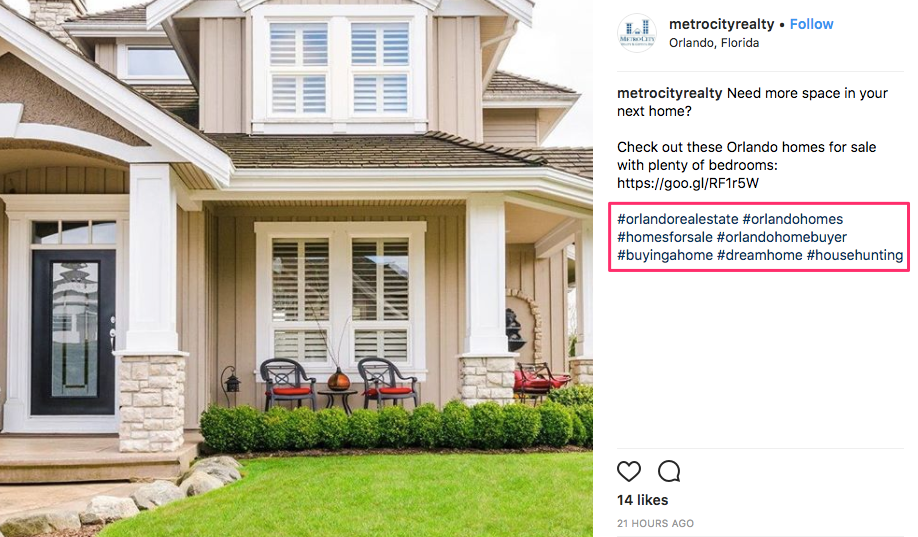
    In the example below, Metro City Realty used customized, location-based hashtags including:

    • #orlandorealestate
    • #orlandohomes
    • #orlandohomebuyer

    location-based Instagram hashtags for realtors

    They also used four of the general real estate hashtags listed above including:

    • #homesforsale
    • #buingahome
    • #dreamhome
    • #househunting

    Examples of Branded or Dedicated Campaign Hashtags

    Using branded hashtags allows people to identify a post as a real estate social media post. Instead of seeing another aspirational home, they’ll understand that they can buy.

    As mentioned before, branded and dedicated campaign hashtags also makes it easier for you to keep track of your posts.

    • #[your real estate team]
    • #[your brokerage or agency name]
    • #[your name]
    • #[name of your social media campaign]

    For example, #ChrisSappRealtor is branded hashtag. Also, Snyder Pritchard Homes turns their agency name into a hashtag – #SnyderPritchardHomes – and adds the name of the parent company for good measure – #williamraveis.

    Pro Tip: What can you post on Instagram besides beautiful photos of homes? Try using Instagram Stories to show your day-to-day activities as a real estate agent. You’ll give your followers interesting, personal content to engage with, and you’ll build trust with your clients.

    Still not sure how to use Instagram for your real estate business? We’ve got you covered. Check out our article: Instagram for Your Business: 11 Tips for More Engagement

    YouTube Social Media for Realtors

    YouTube isn’t for everyone. If you’re not doing a lot of video content, you can shelve plans for a channel until later. But let’s say you do have the time and money to make videos.

    What kind of real estate social media posts are appropriate for YouTube? Well, the platform is perfect for posting video walkthroughs of new properties.

    Older clients especially find virtual tours helpful, but 48% of all buyers appreciate video walkthroughs. Another 27% find videos helpful in general.

    Here’s an example of a very basic video walkthrough of a typical home in Ohio:

    Notice that the person making the video is only using his phone and walks through the house pointing out the property’s features. There is nothing fancy about the video, but it still got over 100,000 views.

    Don’t want to speak? No problem. Here’s another video walkthrough that only uses music:

    Want to get more creative? Try catching up with clients after renovations. Testimonials or Before and After videos show that your properties have potential and that you’ve created trustworthy relationships with past clients.

    Pro Tip: Once you’ve created a video for YouTube, share it across other channels. Made a video for Facebook or Instagram? Reformat it for YouTube and post it on your channel. Videos are great real estate social media content that you can share across multiple platforms.

    Having a hard time getting views on YouTube? Want to know how to get more YouTube views for free? Read our article: 21 Tips on How to Get More Views on YouTube for Free

    LinkedIn Social Media for Realtors

    Again, LinkedIn is one of those social media platforms where it’s best to have a business page and to encourage all your employees to have their own personal profiles.

    That way clients can check out individual agents and still get information about your business.

    Use the platform to connect with other professionals, recruit new employees, and post professional content.

    What type of content is best for LinkedIn?

    RIGHT

    Design your real estate social media content for LinkedIn to establish yourself and your brand as trustworthy. Also, it’s a good idea to post content that establishes you as a thought leader in your industry.

    WRONG

    LinkedIn isn’t the best place to post listings or images of properties for sale. Use the platform instead to build integrity, trust, and expertise. That way, buyers and sellers who check you out on LinkedIn get the impression that they’re working with people who know what they’re doing.

    7 Real Estate Social Media Strategy Tips for 7 Days

    Once you’ve got your real estate social media profiles set up, what’s next? Here are seven ideas that you can try out or consider over the next seven days.

    So, let’s get started on a few ideas to boost your social marketing strategy.

    Day 1: Find and Create Facebook Groups

    Facebook groups are great for getting your content in front of a targeted audience. Also, you can think of joining real estate groups. In these groups, you connect with other realtors and share advice and initiatives. Here’s an example:

    local facebook groups for real estate agents

    To find local groups for listings, try “homes for sale [your city]” or other keyword combinations. You may be surprised to find content that isn’t real estate social media content.

    For example, “homes for sale Indianapolis” resulted in two groups with pets for sale. In that situation, use Facebook’s auto suggest feature to find more relevant keywords.
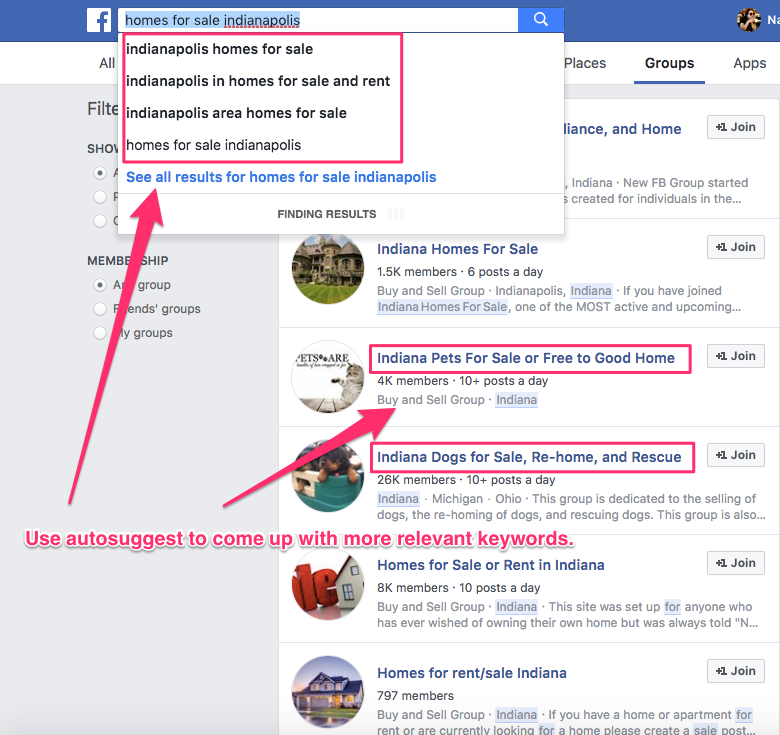
    joining facebook groups for real estate agents

    To find real estate related groups in your area use the keyword “real estate [your city].”

    real estate groups on facebook

    Creating a your own Facebook group isn’t difficult either. You can find the option in the drop-down menu. Select “Create Group,” give your group a name, add members, and choose your privacy settings. Click create and you’re done.

    Pro Tip: If you’re administering a Facebook group, be sure to put a link back to your main Facebook business page. That way all of your profiles are interlinked and connected.

    Day 2: Integrate Facebook Live Into Your Strategy

    Have you ever considered doing a Facebook Live Video of a walkthrough? Maybe you should. Why?

    Live streaming allows the audience to comment and react in real time. You can use the opportunity to conduct a Q&A session about the property. Plus your audience gets a feeling of exclusivity or of being an insider.

    Facebook also allows you to choose your audience for a live stream. That gives you a better opportunity to get your real estate social media content in front of the right people.

    Setting up live streaming is a bit more complicated than creating a group or an event. First, you need to download streaming software then you need to click “create a live stream.” You can go live from your Facebook page, an event, or a group.

    You’ll get something called a stream key that you paste into the software along with the server URL.

    While you’re streaming a live video, viewers can react and comment in real time. You can also write comments and respond to your audience while the video is streaming.

    You can also embed the live stream in a website by clicking on near the bottom of the page. You’ll get an HTML code that you can copy and paste to your website.

    Day 3: Organize an Event and Share It on Facebook

    Having trouble coming up with real estate social media ideas?

    When you go through a content dry spell, maybe it’s time for an event. Facebook events can range from local events and open houses to training or company events. You can organize events and invite guests.

    For example, The Pineapple Group, a real estate agency in Pennsylvania, organized a roller skating party:

    creating a facebook event for real estate agents

    The local roller rink went up for sale, so the Pineapple Group created a fun event for the whole community. As a part of the marketing effort for the property, they made photos and videos during the event.

    Such an event gave the agency an opportunity to connect with their community. They also created hype for a property and got great photos and videos for marketing purposes. Notice that almost 200 people liked the post thanking guest for coming to the event:

    real estate social media facebook event

    Pro Tip: Your event doesn’t have to be extravagant. Is there a local festival or charity run? What about that booth you set up every year at a conference or recruiting event? You know what you’ve got in the pipeline. Add it to Facebook and you’re good to go.

    Day 4: Find Free Advice to Share Across Channels

    Some days, you won’t have listing or an event. You won’t have videos or any real estate social media content at all.

    On days like these, try posting some free advice across your channels. What kind of advice? Here are some examples:

    • How to Move
    • How to Stage
    • How to Sell
    • The Buying Process
    • Neighborhood Tips
    • Renovations
    • Interior Design Trends
    • Real Estate Statistics

    Remember honest agents are what people want. The more advice your share and tips you give, the more honest and trustworthy you will seem to potential clients. Here’s an example of a real estate social media post with advice:

    advice real estate social media post

    Day 5: Consider Creating a Blog for Your Website

    While we’re on the topic of advice, a blog is one of the best places for detailed content of this sort. Real estate social media posts allow for a snippet of advice here and there. But blogs allow you to answer all your clients’ questions in detail.

    The thing is, 95% of all buyers use an online website as a source of information. A further 12% want to find information about the home buying process.

    Now, let’s say you have a blog with articles that walk new buyers through the home buying process. You use SEO best practices. Your articles are ranking well on Google. What is the result?

    You’re giving your audience what they want. Plus, your blog is bringing new people to your website and keeping them there. You’re boosting your organic traffic and generating promising leads. Nice, right?

    At the very least, your blog can establish you as an expert in your industry and build trust with your clients.

    No, blogs are not social media marketing, but they can go hand in hand with your social media efforts. That’s because you can push links out across all channels. Plus, you’ve got great content for your website and your newsletter. It’s a win-win.

    Day 6: Congratulate and Celebrate a Buyer or Seller

    Another great real estate social media post idea is to promote success stories.

    When someone finally buys or sells a house, you’ve got a success story on your hands. Ask your clients if they would be happy to share their story. Most will be proud to have their success shared with others.

    Plus, other clients will see that you secure the happiness and success of your clients. Congratulations, you’ve just made the whole experience that much more human.

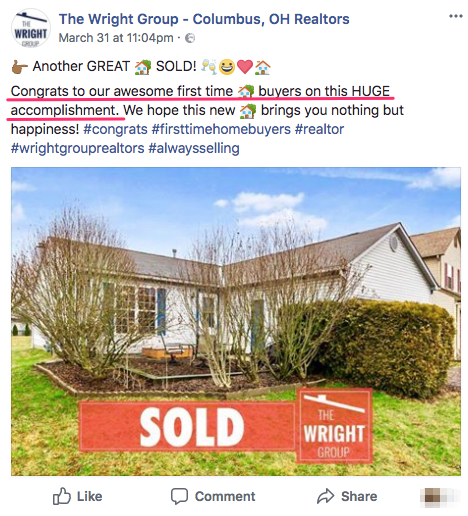
    Here’s an example of how The Wright Group, realtors from Ohio, shared a buyer’s success story on Facebook:
    homebuyer success facebook post

    Pro Tip: Notice that the names of the buyers are not mentioned in the post. If you want to take success stories to the next level, you can create a testimonial. Ask your successful buyers and sellers if they’d be willing to make a statement that you can share on social.

    Day 7: Consider Using Geo-targeted Ads on Facebook

    Unfortunately, Facebook made recent changes to their algorithms, placing an emphasis on content generated by family and close friends. What does this mean for your real estate social media content?

    That means that most of your followers aren’t going to see your posts. And if they do, it’s hard to hit them with the right content at the right time. That’s why it is now necessary to buy ads and promote your content.

    Buying targeted ads on Facebook gets your content in front of the right person at the right time. You’ve got a home to sell? A Facebook ad will put it in the feed of someone looking to buy. It’s unfortunate but necessary.

    Don’t want to spend too much money? Facebook points to Zephyr Real Estate as an ad solution success story. The San Francisco real estate agency used Ringtail’s ad automation solution, resulting in 76% lower cost per lead.
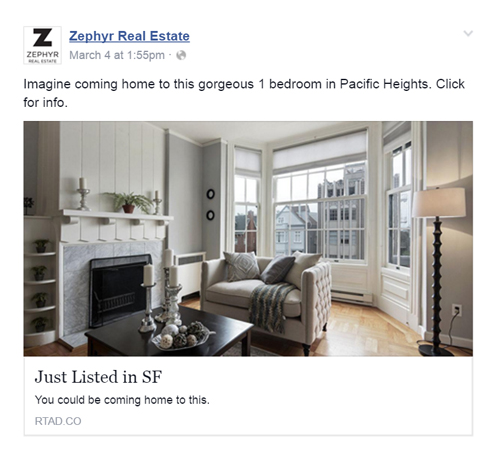
    Facebook ads for real estate agencies

    The solution allows you to auto-generate copywriting for ads. You enter the content it converts it to copywriting. That way you can send bulk ads out without having to waste time on creating copy for each individual ad.

    Conclusion

    You can make your real estate social media strategy as easy as picking a platform and posting images. You can take it to the next level with the 7 day idea strategy outlined in this article.

    Regardless, a good strategy is all about being online. Just be there. Connect with your audience. Build trust. And the rest will come.

  • 8 Hotel Social Media Marketing Strategies and Tips

    8 Hotel Social Media Marketing Strategies and Tips

    When a traveler goes online to book a hotel, do they go to your website? Or do they visit sites like Booking.com or Airbnb?

    How do you position your hotel and website as desirable destinations?

    Well, the only way a guest visits your site directly is when they recognize your brand. And unless you’re the Marriott, the Hilton, or the Ritz, you’ve got work to do.

    The best way to make yourself known is to create an online presence. It’s about putting the right content in the right place through hotel social media strategies and content marketing.

    Still, it’s not enough to have beautiful Instagram or Facebook profiles. You need to make your hotel a desirable destination across all channels.

    That’s why this article will show you:

    • Which social media networks are the best for hotel social media strategies.
    • How to make the best content for hotel social media marketing strategies.
    • How to use social media management as a hotel to your advantage.

    The Best Hotel Social Media Strategies Begin With the Right Networks

    To start, it’s best to point out that every hotel is different and there is no one-size-fits-all hotel social media strategy.

    You may run a boutique hotel or a Bed and Breakfast in a trendy vacation spot. On the other hand, you may only cater to business clientele. Perhaps, you want to cater to a mix of guests year round.

    It’s important to remember that most travelers don’t start making travel preparations by booking a hotel. First, they imagine themselves in various destinations.

    Do I want to go to Brazil or Bora Bora for my honeymoon? Do I want to take the kids to the beach or to the mountains?

    Destination shopping starts with dreaming. Plus, there are three other travel industry micro-moments you need to understand as a hotel. There are the planning and booking stages, when travelers make their dreams reality.

    Finally, there’s the days of anticipation leading up to the trip. Now, while those moments don’t sound like they have anything to do with hotel social media strategy – they do. The majority of travelers expect hospitality providers to engage with them before and during their trip to enhance their experience.

    So, for any hotel that considers itself a vacation destination, it’s important to create content that reaches guests at every “micro-moment” of the journey.

    At the same time, you may want to reach those who know where they’re going and may not be thrilled about it. The “I have to go to London for business” crowd. And here is where things get tricky. To cater to both crowds using the right tone, you need to dominate several channels at once.

    Here are some things to ask yourself when creating your hotel social media strategy:

    • How many social media networks do I have the time and money to run?
    • Which social media networks do my customers use the most?
    • How often can I post on social media?
    • How can I integrate my social media strategy across channels?
    • How do I want to tackle social media advertising and what’s my budget?
    • How important is social media management for hotels and resorts?

    Pro Tip: For smaller hotels that do not have a budget for several social media channels, it’s best to start by reaching out to the clientele you have. For example, if you’re that trendy boutique, you won’t want to miss out on Instagram.

    Which Social Media Platforms are the Best for Your Hotel or Resort?

    Here are the top five social media networks for hotels and resorts:

    • Facebook
    • Instagram
    • Twitter
    • Pinterest
    • TripAdvisor

    Now, while TripAdvisor is a review site and not a social media network, you will need to manage it on a regular basis. Responding to reviews is one of the best ways to show that your hotel listens to customers and pays attention to their needs.

    1. Facebook Social Media Marketing for Hotels and Resorts

    Facebook is the perfect general-use social network for hotels and resorts. That’s because the platform allows businesses to add all sorts of extra tabs, cross referencing all other social networks and websites. Plus, it’s a great place to add all your contact and amenity details.

    One other thing to keep in mind, is that Facebook will often assign pages to businesses. It’s best to claim your page so that you have control over the content and conversation.

    Here’s an example of a hotel that uses Facebook social media marketing well:

    facebook hotel social media strategy

    As you can see in the cover image, 41 Hotel was voted the number one hotel in London by Travel + Leisure in 2017. Your cover image is a great place to point out why you’re the best. A lot of hotels also use the space to add videos.

    Consider the fact that video will account for 82% of all consumer Internet traffic worldwide by 2021. Plus, video brings travel locations alive. There are plenty of free tools to help you make videos, and you can share your videos on Instagram and YouTube as well.

    Among the standout tabs on 41 Hotel’s profile you can see:

    • TripAdvisor Reviews
    • Instagram Feed
    • Offers
    • Book A Table
    • #Hotel41

    We’ll come back to the TripAdvisor Reviews tab in a moment. So, let’s start with the Instagram Feed tab. The tab merges your Facebook and Instagram accounts. Users can go directly to your Instagram feed by clicking the “View on Instagram” button within the page.

    instagram and facebook hotel social media strategy

    One of the best hotel social media ideas is to think of Facebook as a hub for your social profiles and website content – a place on social media where everything comes together. You should try to integrate as many as your social profiles with Facebook as possible.

    Plus, all your content should cycle through Facebook – especially if you have a blog. The idea is to give users access to as much information about your hotel as possible in one location.

    Next, is the Offer tab. Clicking on the Offer tab allows users to view offers without having to see them in their feed or yours. They will see that you’ve posted an offer, but the content is categorized as such. That way you’re not feeding your followers spammy content, and can use your posts to promote more engaging content.

    facebook offers hotel social media strategy

    For example, 41 Hotel hung stockings on their guests’ doors for Christmas. Not only is it a nice gesture, but it’s great content for a well-planned hotel social media strategy. Add a hashtag – #christmasstocking – and add some copy. The result – 84 reactions and several comments.

    best hotel social media marketing for facebook

    We’ll jump to the #Hotel41 tab next. Clicking on the tab allows users to see a feed of all content from Facebook, Twitter, and Instagram with the hotel’s branded hashtag. The tab is another great way to integrate content across platforms.

    You’ll notice that a lot of the content is user-generated. The travel and hospitality industries are perfect for user-generated content. Think about it. When do people take pictures the most? When they’re on vacation.

    But why would you want to retweet or share so-and-so’s vacation pictures? Research shows that Millennials (aka most consumers) trust user-generated content above all other forms of marketing.

    Plus, 53% say user-generated content influences their purchasing decisions over traditional media or banner ads. So, put user-generated content to good use by retweeting, sharing, and liking your guests’ content.

    Consider creating a branded hashtag to make it easier to track the success of your hotel social media marketing campaigns (more on that later) and to engage with user-generated content.

    Finally, the “Book A Table” tab, “Book Now” button, and “Send Message” button all allow guests to make bookings and interact with the hotel directly from Facebook. It’s important for hotels to make it easy for guests to book. Adding Calls to Action (CTA) and click-to-book buttons on landing pages is one of the easiest solutions.

    Now, let’s go back to the TripAdvisor Review tab. If you could only choose one tab, consider integrating Facebook with TripAdvisor. It’s important to respond to TripAdvisor reviews and to make it easy for people to leave reviews. Many hotels have added the tab to their profiles.

    By adding the TripAdvisor tab, you’ll allow your users to write TripAdvisor reviews through Facebook. Both 41 Hotel and One & Only Palmilla have created TripAdvisor tabs to their pages. Clicking on the tab allows users to see images, reviews, and ratings without leaving Facebook.

    tripadvisor and facebook hotel social media strategy

    Pro Tip: Do remember that Facebook also has its own review function. Be sure to activate this function so that users can leave Facebook reviews as well. Collecting Facebook reviews is what enables the star rating on your profile.

    facebook reviews for hotels

    2. Twitter Social Media Marketing for Hotels and Resorts

    Social media marketing for hotels can begin and end with Twitter. For example, the Sol Wave House Mallorca Hotel calls itself the first “Tweet Experience Hotel” in the world.

    twitter hotel social media strategy

    In 2012, the Spanish hotel created a Twitter-based community called #SocialWave only available through the hotel’s wifi. Hotel guests sign in with their Twitter accounts, gaining access to the community of guests staying at the hotel and a concierge service.

    With one tweet, guests can summon cocktails from the bar, order food to their rooms, or engage with other guests through chat, contests, and photo sharing.

    While an extreme example of hotel social media strategy, Sol Wave House does illustrate how far hotels can integrate their services and identities with social media.

    On a less extreme level, most hotels will want to use Twitter to conduct customer service and to send guests time-sensitive updates about events happening at the hotel or in the area. One example of a hotel that does Twitter marketing well is The Cosmopolitan Hotel in Las Vegas.

    best hotel social media strategy for twitter

    The hotel has the second largest Twitter following after the Wynn Las Vegas Hotel at 460K followers. Plus, The Cosmopolitan serves up engaging content ranging from polls and user-generated content, to insightful articles and local events.

    Twitter is best used to update guests about things that are happening right now. It’s the social media platform that you use to engage guest during their stay. At the same time, your guests need to be on Twitter in the first place.

    That’s why you need to build up a following before fully investing in a Twitter hotel social media strategy. Once you’ve built a following, then you can use Twitter to feed guests updates. Plus, Twitter is a great place for hotels to conduct customer service. According to a study by Twitter on UK users, 33% use Twitter for travel-related customer service issues.

    Responding to customer service queries on Twitter can result in an increase in guest spending, recommendations, and repeat guests. Twitter found that 96% of users who have a friendly experience buy from the brand again, while 83% recommend the brand to others.

    One example of a hotel with a working, dedicated Twitter handle for customer service is Hyatt Hotels – @HyattConcierge. Do keep in mind that Hyatt is a large hotel chain with a team that can answer Twitter queries 24/7.

    And that’s the one thing to watch out for – answer speed. As much as 71% of Twitter users expect a brand to respond within an hour of Tweeting.

    While the majority of brands don’t have a problem, you may want to hold off creating a dedicated customer service Twitter handle if you can’t keep up with queries.

    3. Instagram Social Media Marketing for Hotels and Resorts

    Visual content is important for travel and hotel social media marketing strategies. That’s why Instagram is one of the most important social networks for hotels.

    You want travelers to get excited when visualizing staying in your hotel and spending time at their destination. Instagram is the perfect platform for posting beautiful images of your hotel and desirable destinations in your area.

    Here’s an example of a hotel Instagram marketing done right:

    instagram hotel social media strategy

    Here’s an example of content that citizenM posted to Instagram to show desirable locales around London:

    best hotel social media strategy for instagram

    The citizenM Instagram post does two things right. First, it shows a restaurant in London that has a button for champagne. It’s important to keep the tone of the social platform. Instagram leans toward the artistic and glamorous. Champagne buttons are pretty glamorous.

    Second, the post mentions that there are more London hotspots available in the hotel’s city guides. CitizenM has a dedicated blog that gives readers recommendations, information, and other interesting content.

    Having a blog is one of the best things you can do to make your hotel’s website more visible. You’ll show up for more queries in Google, your website will have a stronger domain authority, and you’ll have endless content to push out through your social media channels.

    Again, you’ll want to make sure you do include some user-generated content as a part of your hotel social media strategy. That’s also why you’ll want to make sure you’re using popular and dedicated hashtags across all platforms.

    Here is an example of a citizenM post. Here the hotel has integrated user-generated content into their Instagram marketing efforts:

    user-generated content for instagram hotel social media

    Another thing you’ll want to do for your hotel Instagram marketing strategy is create space within your hotel that is designed for Instagram selfies. Now, you don’t have to “create” the space. You can use space that already exists by promoting it as Instagrammable.

    For example, citizenM has a marble, spiral staircase in one of their locations. They posted an image to Instagram stating that you can find an “Instagrammable spiral staircase” right in their hotel:

    instagrammable space for hotels on social media

    Here’s another example of a hotel that uses the space it already has:

    instagram and facebook stanley hotel

    In this post, you can see a lot of the best hotel social media marketing tactics in action. For example, the content is a user-generated Instagram post shared by the hotel. Second, the post integrates Instagram and Facebook.

    Third, if you didn’t notice, the Stanley Hotel is the very same hotel from Stanley Kubrick’s The Shining. The iconic hallway from the film is perfect Instagram material. Promoting the image invites users to use the space as such.

    Pro Tip: Consider creating corresponding hashtags for your Instagrammable space. Remember, you’re creating opportunities for your guests and influencers to feature you on Instagram for free. A hashtag will let you keep track of the success of the campaign.

    4. Pinterest Social Media Marketing for Hotels and Resorts

    Having both a Pinterest and an Instagram account is ideal for hotel social media strategies because the two platforms serve two different purposes. The difference between Pinterest and Instagram is aspiration.

    Many Pinterest users spend time pinning images of places and hotels they would like to visit sometime in the future. Instagram is for showing off that you made it there. Plus, Pinterest is different when it comes to demographics.

    The majority of Pinterest users are women in their 40’s who make $50K per year or more. These are women who have money and plan their family vacations using the social media platform. Plus, it’s interesting to note that Millennials use Pinterest as much as Instagram.

    Instagram is not going to give you the same type of targeted demographic. Instagram is more about engaging the influencer. Pinterest is about engaging the mom with the checkbook.

    One hotel that does Pinterest hotel marketing well is the Four Seasons. The hotel chain has seen an incredible gain in traffic since they joined Pinterest as a part of their hotel social media marketing strategy.

    best hotel social media strategy for pinterest

    Traffic gains include a 1,000% increase in daily average visitors from Pinterest and a 1,700% increase in daily average clicks to its website from Pinterest year-over-year. One reason why Four Seasons is so successful, is that the hotel tracks saves, likes, and visits to figure out what’s popular on Pinterest.

    On their main account, Four Seasons has 63 boards ranging in topics from travel destinations and food to bridal inspiration and their “famously comfortable” beds.

    pinterest hotel social media marketing strategy

    Another important aspect of the Four Seasons Pinterest strategy is that the hotel creates individual accounts for each location. For example, the Four Seasons Hotel Los Angeles in Beverly Hills uses its boards to highlight the luxury of Hollywood and California Flower Power.

    four seasons hotel social media strategy for pinterest

    If you’re a large chain hotel like the Four Seasons, creating accounts with individualized board for each location is the way to go. Plus, remember that Pinterest isn’t just about sharing great images. Pinterest is a social media platform for bookmarking ideas. Whether it’s flower arrangement instructions, a recipe, or furniture DIY, make sure you include valuable content that’s easy for pinners to revisit and use later.

    5. TripAdvisor Social Media Marketing for Hotels and Resorts

    You need lots of quality, online reviews if you want your hotel to perform well. That’s because most customers rely on online reviews and sites like TripAdvisor to decide which hotels to book.

    The first thing you need to do on TripAdvisor is claim your listing. Once you do that, you can respond to reviews, update details about your hotel, and get analytics for your hotel on TripAdvisor.

    It’s of the highest importance that you update even small details about your hotel. You have to make sure that what people see online is what they’re going to get in reality. See, your guests are already building up expectations about your hotel in their heads. When reality doesn’t align, that can result in bad reviews for you.

    Anytime there are new amenities, renovation, or a fresh coat of paint, you need to make sure your TripAdvisor account reflects the change. To be honest, a good rule of thumb for hotel social media strategies is to make sure all your social media accounts reflect any changes.

    People want to get what they see. Keeping your information and images fresh and accurate ensures that happens and builds trust and loyalty with your guests.

    Here’s an example of a hotel that has a handle on TripAdvisor social media marketing:

    414 hotel best tripadvisor social media strategy

    The 414 Hotel is the #1 Traveler Ranked hotel in New York City on TripAdvisor. Users looking for hotels with TripAdvisor can filter by Traveler Ranked, Best Value, Lowest Price, and Distance. It’s best if your hotel pops up in the top results for Traveler Ranked, but you need a lot of positive reviews for that to happen

    That’s one of the reasons why you want to encourage lots of reviews as a part of your hotel social media strategy. One way to do so is to sync TripAdvisor with your Facebook profile as mentioned before, another is via email. But one thing you will want to stay away from is adding the TripAdvisor widget to your website.

    If people are visiting your website, they’re either looking for information or they’re ready to book. Either way you do not want to hinder their activities or redirect them offsite. While it sounds like a good idea, adding the TripAdvisor widget to your website could be damaging.

    Finally, the most important part of managing a TripAdvisor account is responding to reviews. Now, it’s obvious that bad reviews need mitigation. Here is an example of how the General Manager at the Belvedere Hotel in New York City handled a bad review on TripAdvisor:

    responding to reviews on tripadvisor

    You can see that he promises that action will be taken and that he will be “reviewing comments with the staff” to ensure no one has an experience like the guest described in his review. Treating bad reviews as “feedback” is a good move for hotel social media strategy. Guests want to see that you’re listening and that you care about them and their experience.

    The less obvious strategy is to also respond to and reward positive reviews. Saying “thank you” for a positive review again makes your guest feel heard, and let’s them and others know that you’re paying attention.

    Pro Tip: While Snapchat caters to a demographic too young to book a hotel, you may want to consider it. Using Snapchat Geofilters for your hotel is a great way to engage with younger guests staying with their families.

    Feeling confident about your hotel social media strategy? Want to take the next steps and find out how to use social media for market research? Check out our guide: 7 Tips on How to Use Social Media for Market Research

    Tying It All Together With Google My Business Profiles

    One thing that needs to go at the top of your hotel social media marketing strategy “To-do List” is claiming your Google My Business Profile(s).

    Remember, if you’re running a franchise, you will need to claim a profile for each location. And if you’re part of a large chain, you need to make sure information across business profiles, social profiles, and websites is consistent.

    Why is claiming your My Business Profile important?

    Claiming your profile allows you to show up in your own Knowledge Panel in Google search results. That’s prime Google real estate. Knowledge Panels contain nuggets of information about your business, including links to all your social media profiles.

    Here’s an example:

    google my business profiles for hotels and resorts

    Want to find out more about how local SEO practices, such as Google My Business Profiles, can help small hotels and businesses? Read our guide: Local SEO for Small Businesses

    3 Tips for Understanding Social Media Management for Hotels and Resorts

    Social media management for hotels and resorts is a great way to manage your online reputation, conduct customer service, find influencers, and track the success of social media campaigns.

    Tip 1 – Use Branded Hashtags to Track Hotel Social Media Campaigns

    To manage your online reputation and conduct customer service, you’ll use your brand name. But to find influencers and to track the success of a hotel social media strategy, you may want to consider using dedicated hashtags.

    What are dedicated hashtags?

    Dedicated hashtags are anything that represents or symbolizes your campaign and isn’t already a popular hashtag. You don’t want to use hashtags that people can apply to anything. Otherwise, it will be difficult to sift out mentions pertaining only to your campaign.

    One way you can create a dedicated hashtag is to use the name of your hotel as citizenM does for their campaigns. In the post below, you can see that they’ve created a couple of dedicated hashtags including #citizenMsays and #citizenM.

    branded instagram hashtags citizenM hotel london

    You can also create a dedicated hashtag that reflects the nature of the campaign. A good example is Travel Brilliantly for Marriott hotels.

    The Marriott launched the marketing campaign in 2013 and still uses it to unify it’s brand across marketing materials and social media channels with the hashtag #TravelBrilliantly. While the hotel social media strategy is quite old, the hashtag still gets traction across different channels.

    Here you can see how the Marriott incorporated the slogan into their Facebook cover image to form a cohesive brand message across platforms:

    marriott hotel social media strategy hashtags

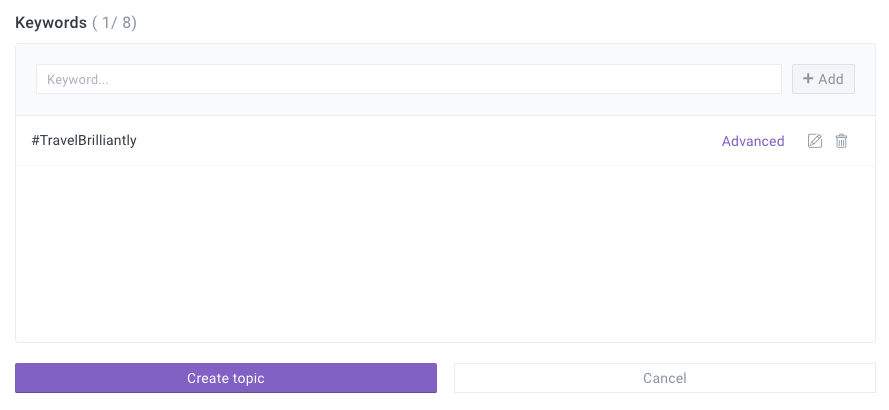
    To track campaigns, you would simply plug the hashtag into a social media monitoring tool:

    unamo social media hashtag monitoring

    The result? You’ll see all public mentions using your hashtag. What might be rather surprising is that these hashtags don’t seem to get much traction. For example, citizenM’s namesake hashtag appeared in 18 mentions over the last month.

    The Algonquin Hotel’s #algonquincat hashtag only appeared in 8 mentions last month. Granted, the hashtag only applies to posts about the Algonquin Hotel’s famous live-in cat, Hamlet, and the hotel’s social media strategy that casts Hamlet as a mascot.

    And while #TravelBrilliantly did well in comparison with 254 mentions, most were made by the Marriott themselves.

    marriott travel brilliantly social media campaign

    That’s why it’s a good idea to use popular hashtags alongside your branded hashtags. Using popular hashtags will give you the reach you need to get your message in front of a bigger, more influential audience.

    Tip 2 – Use Popular Hashtags to Increase Hotel Social Media Reach

    The hardest part here is identifying which hashtags are popular. Simple hashtags like #hotel and #travel tend to be popular and get a lot of traction. For example, while #TravelBrilliantly had only 254 mentions, #hotel had almost 28,000 mentions over the course of one month.

    monitoring #hotel unamo social media

    Other popular hashtags used in mentions with #hotel include #travel, #vacation, and #luxury. All are good choices for a hotel social media strategy for Instagram.

    best hotel social media hashtags

    Other popular hashtags for hotel social media strategies include:

    • Location-based Hashtags ( #paris, #nyc)
    • Other Hotel-based Hashtags (#hotellife, #hotelroom)
    • Travel Hashtags (#traveller, #travelblogger)
    • General Use Instagram Hashtags (#love, #instagood, #beautiful)
    • Object-based Hashtags (#coffee, #champagne)

    So, a post with both branded and popular hashtags would have a string of hashtags that looked something like this:

    #citizenM #london #hotellife #hotel #travel #linstagood #beautiful #campagne #lovelondon

    citizenM hotel hashtags on instagram

    Tip 3 – Identify Influencers for Content and Popular Hashtags

    One way to track down popular hashtags for your hotel social media strategy is to check out what the influencers are using. You can do that by finding influencers already using your dedicated hashtags. Plus, it’s not a bad idea to check out the accounts of the top travel and hotel brands.

    For example, the top influencer using the #TravelBrilliantly hashtag is Instagrammer lavivienyc, who also happens to rank as a top influencer for #hotel.

    influencer hotel social media strategy

    Here’s the post from above on Instagram:

    instagram influencers for hotel social media marketing

    Notice the use of branded hashtags for both the Sheraton and Marriott hotels. Plus, there are several location-based hashtags (e.g., #hawaii) and some general travel hashtags, such as #travelblogger and #travelmore.

    Once you’ve mined the post for popular hashtags, you might want to consider posts like the one above as perfect for user-generated content that you can share and promote across your social channels. And once you’ve done that, you may even consider reaching out to an Instagram influencer like lavivienyc to further promote your brand as a part of your hotel social media strategy.

    Remember, Instagram users are some of the most engaged social media users – 10x more than Facebook users for example. And many people are now choosing destinations only to recreate images they find on Instagram.

    Connecting with an influencer who acts as a brand ambassador for your hotel could result in a ripple effect. Other Instagrammers will book your hotel hoping to capture the same images and luxurious experience as the influencers they follow. And yet others will book thanks to them. That’s why influencer marketing is one of the best hotel social media strategies.

    finding influencers for hotel social media strategies

    Pro Tip: Let’s say you decide to find an Instagram influencer for your hotel. How do you choose a great brand ambassador? The key is to look beyond the number of followers. Instead, choose influencers who are well suited to your brand and have a highly engaged following.

    Making sure your social media monitoring keywords render the perfect results is difficult. Find out how to refine your searches for more relevant results. Read our guide: Boolean Search Operators for Social Media Monitoring

    Conclusion

    The thing to remember as a hotelier is that taking a customer from daydreaming to booking is all about well-positioned content and timing. That’s why it’s important to have a well-crafted hotel social media strategy.

    Plus, the only way to beat the big boys who dominate Google Ads and the search results is to make yourself known. Create blog content that outranks your competitors. Create a social media marketing strategy for hotels that takes that content to guests when they need it most.

    Do these things and you’ll find that you’re well on your way to turning your hotel into a destination all by itself.