When Dove launched its #SpeakBeautiful campaign in 2016, it relied heavily on social media market research to compile the data it needed for its social media strategy.
They analyzed over 5 million social media mentions on Twitter and found that approximately 80% of female users online had experienced negative body shaming comments.

What happened next was one of the most effective online marketing campaigns of the 21st century:
- 36% decrease in body shaming comments on Twitter
- 63% increase in sales
- 168,000 mentions with the hashtag in a year
What Dove and Twitter used to their advantage, businesses are now turning to in droves – using social media for market research.
Social media market research is the process of gathering quantitative and/or qualitative data from social media platforms to understand social, consumer, or market trends.
Other forms of market research can also be effective – such as surveys, focus groups, online polls, etc., – but are costly, time consuming, and inconclusive.
Social media market research is a better business investment as it:
- Has a higher ROI
- Gives immediate and/or historical data
- Returns results from independent environments
There are a variety of different methods, tools, and tips you can use to uncover market insights on social media, which we’ll cover in this post.
Establish Goals
Every social media market research campaign has to have a clear goal in mind:
- Do you want to conduct market research on your brand, products, online consumer behavior, consumer insights, customer service, or competitor insights?
- Do you want qualitative or quantitative data or both?
- If so, what measurements will help you define this?
- What social media channels do you want to mine data from?
Establishing a clear goal will help you plan and execute the way in which you attain your information.
1. Define Your Target Goal
Researching consumer insights on brands and/or products has long been a staple of social market research.
To define a target goal, you must first definitively state what your business wants information for:
- Product research
- Product launches
- Behavioral insights on target consumers
- Customer service
- Defining buyer personas
In social media monitoring, this takes place on a more granular level; you can parse through each mention and gather feedback as you would an open-ended survey.
On a social media listening level, you can aggregate insights to establish trends and data in quantitative form.

In Dove’s case, they targeted quantitative social media behavioral insights that were affecting their target consumers.
Thus, their market research strategy probably looked like this:
- Identify a target demographic (adult women) and their pain points (beauty / body image).
- Recognize the places (social media platforms) where their target demographic is most confronted with these pain points (body shaming).
- Undergo intensive research on how target consumers are affected in these places (social media market research).
- Create a campaign that gets to the heart of the issue by having the target demographic assess the problem organically (women choosing which door to walk through).
- Publish the data (research findings) in tandem with the campaign (visual content) via the medium or place where the target demographics experience the pain point the most (Twitter).
The end result was a viral campaign that really began with understanding social behaviors on social media.
This is just one example of a brand relying on social behavior to market its products, but there are a variety of ways social media market research can be used to boost business.
2. Choose Quantitative or Qualitative Data or Both
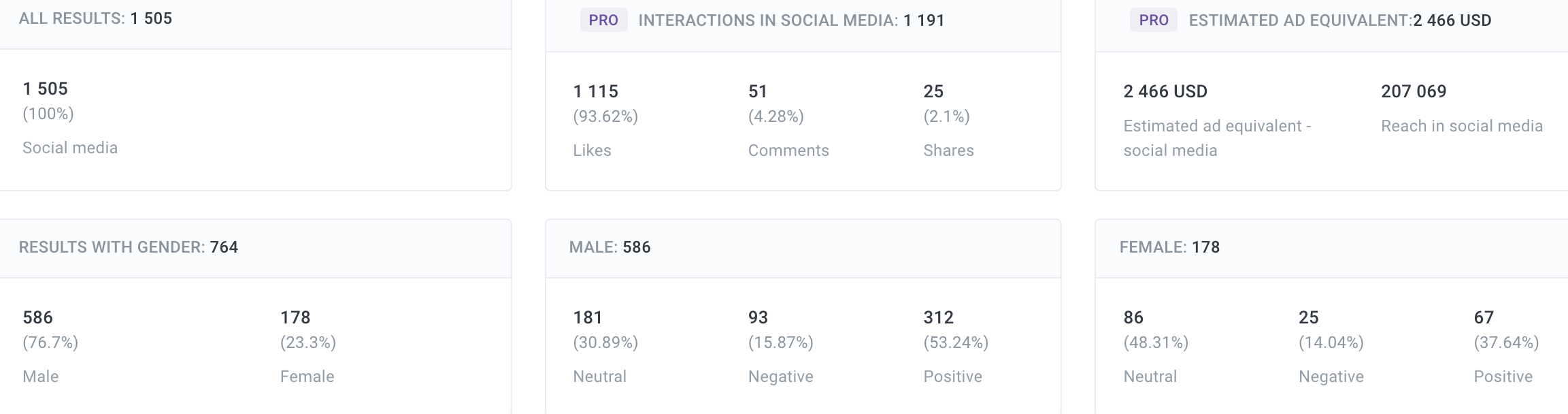
Quantitative data will come in the form of concrete numbers you can use to evaluate or measure your research.
This can come in the form of:
- Likes
- Shares
- Comments
- Mention volume
- Share of voice
- Reach
- Followers
- Subscribers

Depending on the social media platform, there are numerous metrics you can use to compile quantitative data.
Qualitative data will represent more of the “sentiment” and interpretation of certain topics in regard to your research.
Commonly, this kind of data and research is performed daily by social media managers in regard to customer service and identifying feelings about the brand or products.
This can come in the form of:
- Sentiment analysis
- Word contextualization
- Theme categorization
- Industry trends
Qualitative research is usually a precursor to quantitative social media research – it looks to uncover a certain feeling in relation to a topic.

Think of qualitative research as social media monitoring to uncover specific mentions and feelings about a topic.
Then by applying social media listening to understand the more widespread sentiment, trends, and context in aggregate, you can get more quantitative data to draw conclusions from.
For example, a business discovers that they have 1,000 mentions about their product (quantitative) of which 84% of the mentions have a positive sentiment (quantitative).
3. Choose Social Media Channels
Deciding which social media channels to mine data from is the next most important step in establishing how you want to acquire your data.

Different social channels have different demographics depending on region and behavioral norms for the channel.
Conducting social media market research on modeling careers on Twitter, for example, will yield much different results than on LinkedIn.
If we look at the demographic data for each social channel in 2016, we’ll notice a few trends and data groups that can help us choose which channels to pick.

What’s more is that you can pivot your market research goals to these specific channels to try and mine more data from target demographics.

Again, how you choose channels for your social media market research will depend entirely on your goals and strategy, but choosing the right channels is a vital step.
How to Get Social Media Market Research Data
There are numerous social media analytics platforms out there that can help you acquire the data required for actionable insights.
4. Choose The Right Tool
Choosing the right tool is as paramount as defining a goal – businesses need a tool that allows them to:
- Mine a high volume of mentions from the necessary channels
- Clean the data when necessary with features that can fine-tune results
- Provide actionable and conclusive data with advanced metrics.
For our examples we’ve been using Unamo Social Media Monitoring, but there are also a variety of other tools that can help mine the necessary data.
Some tools specifically monitor one channel, while some do a multitude of social media channels, blogs, and news publications.
Choose what’s going to give you the most relevant data for your target goals and demographics.
5. Choosing the Right Keywords
Your keywords are essentially the questions that will shape the results you get.
When coordinating your social media market research, it’s vital to understand which combination of keywords will help you attain the data you want and exclude the data you don’t.
Try to be generic with your search terms to cast a wide net; however, you need to ensure the data you’re getting is as detailed as possible.
For example, if we set up a topic to find out how people feel about the iPhone 8 and 10, then we will want to exclude certain terms that vendors might use that flood social media.
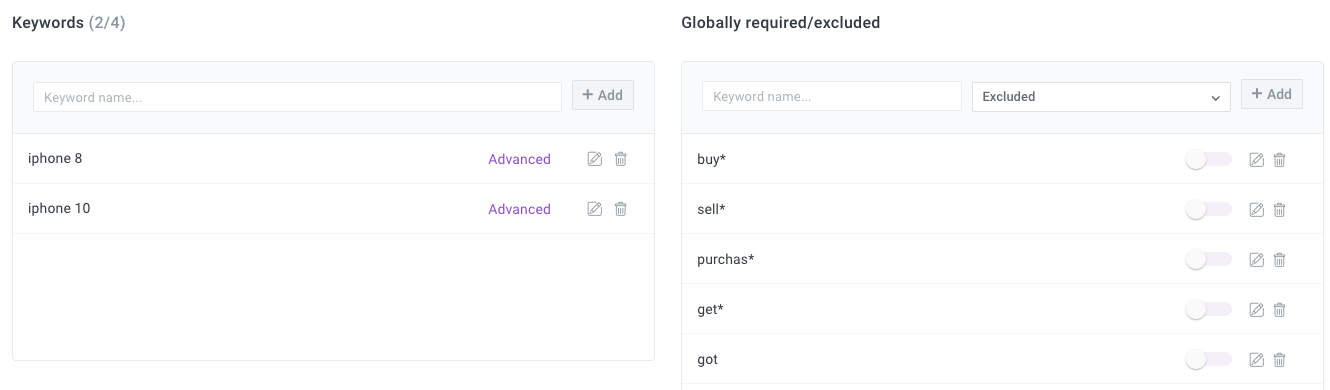
We use the asterisk rule in order to make sure that any variations of the root before the asterisk appear in the results.
This enables businesses to find mentions about the product itself and exclude words revolving around selling the product.
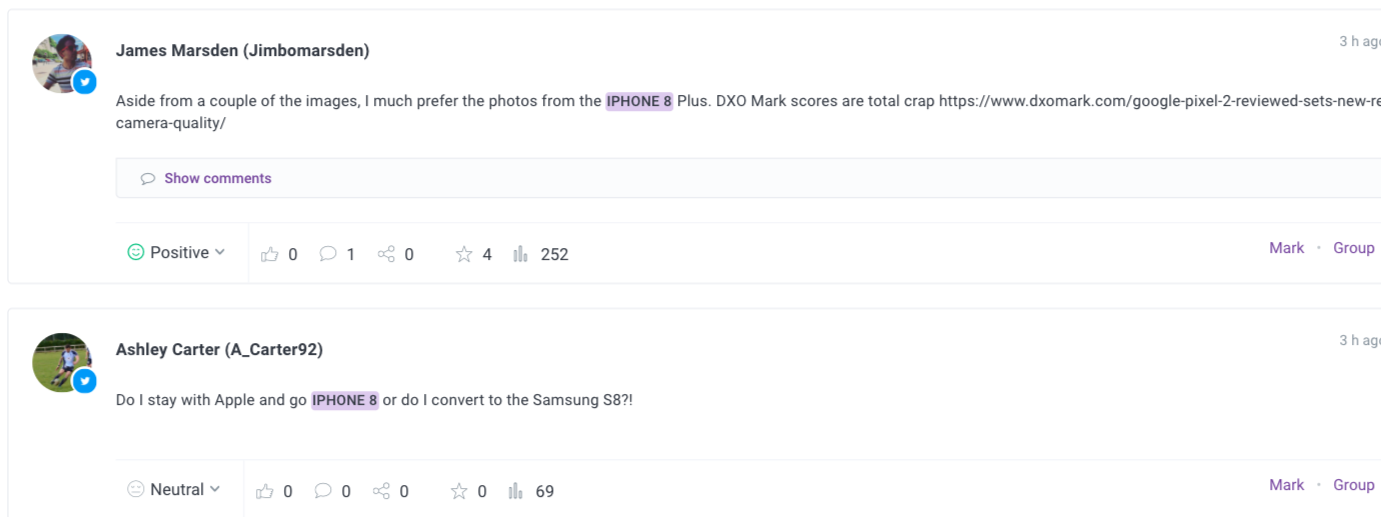
From this qualitative data, businesses can infer that a lot of discussion is taking place about the iPhone 8 camera and batteries, which they can then use to:
- Track additional keywords revolving around these subjects in relation to the product.
- Understand the quantitative data for the new keywords based off the qualitative results
- Formulate a marketing strategy that can capitalize on the positive feedback and pivot against the negative feedback.
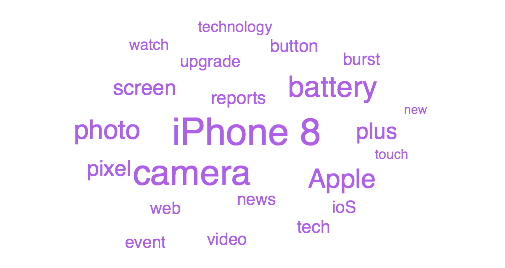
We can also easily attain qualitative data from word clouds which depict the most common words appearing in context with the main keywords.
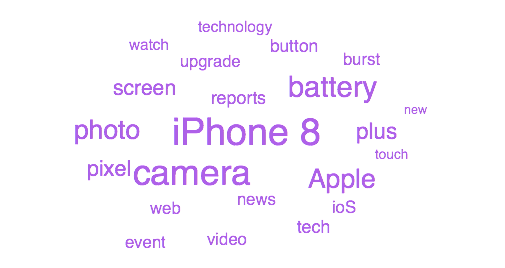
Market research strategies vary depending on research goals, but it’s a good overall approach to cast a wide net and then build a quantitative data strategy with social listening tools.
6. Data Cleaning
Now that we’ve identified a trend within our social media topic, we can further parse the data to uncover more tailored market research data.
Data cleaning is the process of recognizing irrelevant, misleading, or incomplete parts of your data set and modifying your parameters to reflect more accurate data.
This can be one of the most time consuming aspects of social media market research as it requires a lot of time and patience to uncover significant trends that are bringing in unwanted data.
For example, companies like Kleenex, Sharpie, or Google may have an extremely hard time data cleaning for mentions about their brand because their brand names have become nouns or verbs.
Similarly, a brand like Target faces difficulties because the word is both the brand name and a commonly used noun and verb.
Thus, these brands have to be extremely meticulous about how they use additional keywords in conjunction with their brand for social media market research.
In our example, we’ve homed in on mentions of our main keyword that include “battery” in the mention and exclude vendor related keywords.

This enables us to gain quantitative social media data on our topic to measure the volume of mentions, potential reach, shares, and more.
We can also clean the data by excluding more words, segmenting by male, female, or unknown gender (usually publications or businesses), or filtering by sentiment alone.
On traditional social media platforms, there aren’t a lot of options to filter the data for conclusive market research results, which is why more advanced toolsets are necessary.
Drawing Conclusions
Once we have cleaned our data it’s time to draw conclusions and formulate a strategy.
7. Turn Conclusions Into Strategy
The end goal is of course how businesses turn social media market research into strategy.
Staying within the example above, we can conclude from our social market research that the social reach of the issue decreased significantly over the past few weeks while the amount of mentions stayed fairly consistent.
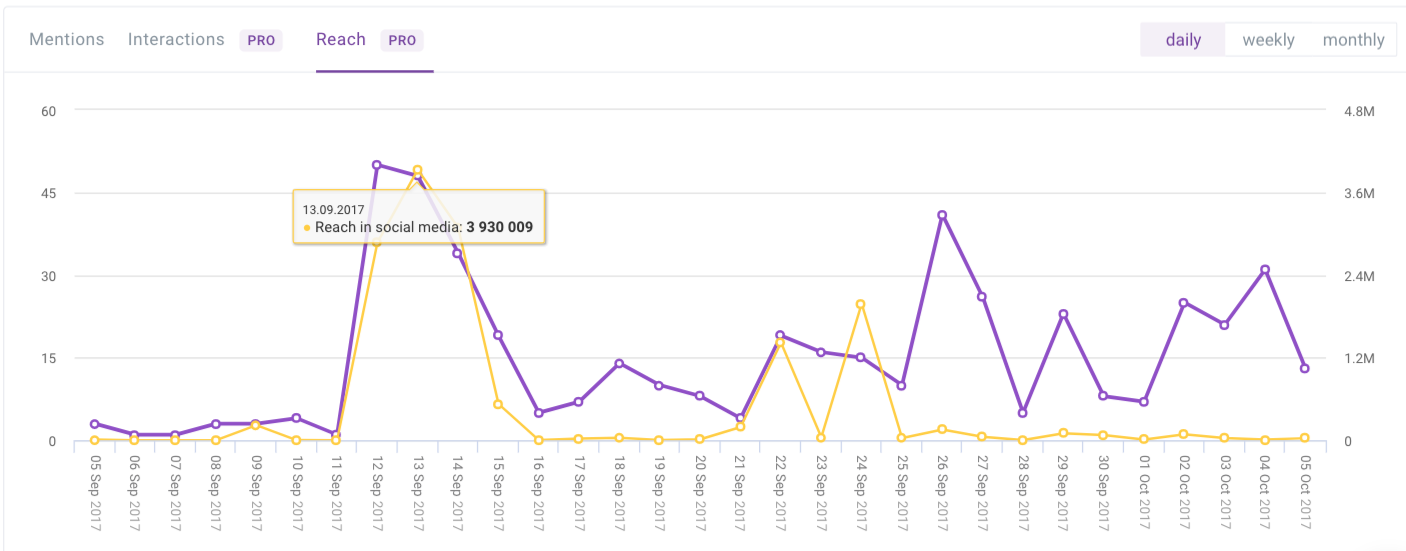
This tells us that many of the tech influencers discussing the topic have moved on – the reach has plummeted – while more modest profiles have continued to mention it.
We also know that the most engagement with the product was via video content as YouTube mentions were the most prolific.

Our social media market research in this example has identified that:
- Tech influencers created a flurry of PR around the topic in a relatively short period.
- YouTube was the primary channel that the product was discussed on.
We can conclude that one potential remedy for this problem would be to reach out to YouTube influencers to get them to promote the product in a positive light to avoid more backlash on social media.
Conclusion
Social media market research is just one avenue businesses can take to gain insights on their target consumers.
Channels like Facebook, Twitter, Instagram, etc., provide businesses a unique look into consumer behavior in environments where insights are given freely and (mostly) untainted.
However, social market research may not be for everyone; it depends on the insights you want, where you’re likely to find those insights from your target consumers, and the metrics needed to quantify and qualify the data.