Online Services

Category: Ideas Blog

  • Social Media Marketing for Travel Agents (+20 Examples & Tips)

    Social Media Marketing for Travel Agents (+20 Examples & Tips)

    Travel agencies are dead, long live social media.

    No one uses travel agencies to book trips anymore, right?

    Why would you when you can book your own plane tickets, rental cars, and Airbnb flats online? Why would you when Instagram and Pinterest tell you where to go?

    But what if travel agents could join the party? What if all it took was being on social media too?

    Well, many travel agencies are finding that a strong social media presence is the way to go. Whether it’s on Facebook, Instagram, Pinterest, or all three.

    Strong social media marketing for travel agents is all it takes to get the show on the road. And it’s easy.

    It’s the same as traveling – all you have to do is find someone to help you know where to go and how to get there.

    That’s why this article will show you:

    • The 5 best social media marketing networks for travel agents.
    • How to implement social media marketing strategies for your agency.
    • How to use social media management and social listening to your advantage.

    Social Media Marketing for Travel Agents – The 5 Best Social Networks

    The first thing you’re going to want to do is to come up with a unique social media marketing strategy for you. Here are some things that you should consider in the beginning:

    • How many social media networks do you have the time and money to run?
    • Where is your audience and which social media networks should you choose?
    • How often can you schedule posts and do you need tools to help you?
    • How will you integrate all of your social media channels and your website?
    • How do you want to tackle a social media marketing advertising strategy?
    • How important is social media management and which tools do you want to use for it?

    Which Social Media Platforms are the Best for Your Travel Agency?

    A word of advice. If you’ve only got the time and money to run one social account on top of running your business, go for Facebook. The social network will give you the greatest variety of engagement opportunities, access to the biggest audience, and integration with a ton of free marketing tools.

    Here are the top 5 social media platforms that are necessary for travel agencies:

    • Facebook
    • Instagram
    • Pinterest
    • Twitter
    • LinkedIn

    Facebook Social Media Marketing for Travel Agents

    Social media marketing for travel agents should start with Facebook. Think of Facebook as your home base. It’s there that you will want to secure fans, add photos, promote content, handle customer service queries, interlink your social accounts, advertise, and create events and competitions.

    Here’s an example of social media marketing for travel agents on Facebook:

    Facebook social media marketing TUI

    TUI is the world’s largest travel and tourism agency. So, it may not come as a surprise that they’re doing well. But here’s how.

    In a recent Facebook ad campaign for Nordic TUI, the travel agency used video, carousel ads, and link ads, resulting in a 55x return on ad spend. The return was 89x for Swedish travelers. Facebook recognized TUI as one of the best performing travel agencies on the network.

    And it’s not just about having the right advertising strategy. For example, TUI knows that it’s Nordic customers go to Facebook first, so they provide them with plenty of great content. You can use a social media management tool to find out where your customers are – more on that later.

    TUI travel agent social media marketing

    Instagram and Pinterest Social Media Marketing for Travel Agents

    Next, it’s best to join at least one photo-sharing site. In an ideal world, you should have a presence on both Instagram and Pinterest, as the two sites are fundamentally different. But an account on any image-based site is important because the travel industry is photogenic.

    Plus, there is a unique connection between travelers and these sites. For example, a study by Schofields Insurance revealed that 40% of Millennials choose a vacation destination based on how Instagrammable it is. Millennials make up the majority of market consumers.

    Here’s an example of a social media marketing for travel agents on Instagram:

    smartflyer instagram marketing for travel agents

    As you can see, SmartFlyer has over 19.9k followers and knows how to take great pictures. Having a strong Instagram following is good for business as 80% of Instagram accounts follow a business and 30% of users buy something they first saw on the platform.

    Plus, over 120 million Instagram users visited a website, got directions, or called, emailed, or direct messaged a business because of advertising.

    social media marketing travel agent smartflyer

    Here’s an example of social media marketing for travel agents on Pinterest:

    expedia social media marketing pinterest

    Expedia, one of the top earning travel agencies in the world, has almost 50,000 followers on Pinterest and 41 boards. Their boards range from destinations like Europe and Australia to travel topics such as “honeymoons” and “foodie travel.”

    A good thing to remember is that Pinterest is an aspiration planning site. Unlike Instagram, users aren’t sharing pictures of their lives. They’re bookmarking pictures that depict how they’d like their lives to be. Whether it’s how they want to dress, what they want to eat, or where they want to travel. That’s why Pinterest is a great part of social media marketing for travel agents.

    social media marketing for travel agents Pinterest

    Twitter Social Media Marketing for Travel Agents

    When it comes to Twitter, you have a few choices. Twitter is great platform for providing dedicated customer service and communicating with your followers. If you’re using Facebook or other channels for customer service, it’s still a good idea to have personal Twitter accounts.

    Use your Twitter account to stay briefed on industry news, keep up with travel trends, follow influencers, and promote your content. Be sure to join conversations by using trending hashtags and adding shortened links to your content.

    Here’s an example of social media marketing for travel agents on Twitter:

    orbitz twitter social media marketing for travel agents

    As you can see, Orbitz has a ton of followers and cheeky copywriting. Plus, they link to their service and help page to reroute customer service queries back to their website.

    You don’t need to have a large corporate Twitter account like Orbitz if you’re starting out small. Alternatives include creating a dedicated customer service Twitter account or creating a personal Twitter account and linking back to your website or other social media accounts.

    For example, KLM runs a Twitter account that keeps travelers updated on important information through tweets and provides them with customer service through private messaging. Yes, KLM is a large airline with the capacity to provide customer service in 10 languages. But their hybrid approach to Twitter is achievable on a smaller scale.

    KLM Twitter customer service

    LinkedIn Social Media Marketing for Travel Agents

    Finally, LinkedIn is a great way to become a thought leader in your industry, to run recruitment campaigns when you’re hiring, and to network with important people.

    Besides, the site is for professional working people. And working people have vacation days and take business trips. Not a bad place to post enticing images and content that shows how nice it is to go on vacation and get away from it all.

    Here’s an example of social media marketing for travel agents on LinkedIn:

    social media marketing for travel agents LinkedIn

    Other Social Media Marketing Options for Travel Agents

    You may also want to consider Youtube. Why? Consider the fact that video will account for 82% of all consumer Internet traffic worldwide by 2021. Plus, video brings travel locations alive. There are plenty of free tools to help you make videos, and you can share your videos on Facebook and Instagram as well.

    Here’s an example of social media marketing for travel agents on Youtube:

    CruiseOne Youtube marketing for travel agents

    Here, CruiseOne made a video that takes you on a tour of the Royal Caribbean Oasis of the Seas cruise ship. The video has over 500,000 views and the travel agency has almost 2k subscribers. Plus, they can post the video on their website and other social media channels.

    Pro Tip: The more integrated your content, the easier it is for users to engage. That’s why you should interlink all your social accounts and your website. Also, place sharing buttons in strategic places on your website. For example, place Pinterest share buttons next to images.

    Ready to get started on your Facebook Business Page? Need some tips on how to set things up? We’ve got you covered: 7 Simple Tips to Optimize Your Facebook Business Page

    How to Use Social Media to Market Travel as an Agency

    Now you know where you’re going to post and how many resources you have. But what does social media marketing for travel agents look like in action? Here are some ideas for you:

    • Stay on top of hot trends and vacation spots.

    One way to stay on top of hot trends is to follow influencers, and Instagram has a ton of them.

    There are some already established influencers such as Brian Kelly, whose influence comes from sharing tips on how to get the most out of travel reward cards, and Murad and Nataly Osmann, who are famous for the #followmeto project:

    instagram travel influencer

    Why should you pay attention to influencers?

    Exhibit A: In 2015, a small community in New Zealand invited influencers to come for a visit. The result was a 14% increase in tourism for Wanaka – the biggest jump in the country. All because some Instagrammers came and took pictures.

    That’s in part because Instagram users are some of the most engaged social media users – 10x more than Facebook users for example. And many people are now choosing destinations only to recreate images they find on Instagram.

    Social media marketing for travel agents is also about engaging with influencers who talk about trendy topics. To find such influencers you’ll want to use a social media management tool.

    Let’s say you read on Lonely Planet that Seville, Spain will be the top city to visit in 2018. By plugging “Seville” and “travel” into a social media management tool, you can find out which influencers are talking about traveling to Seville.

    Here’s what it looks like in action:
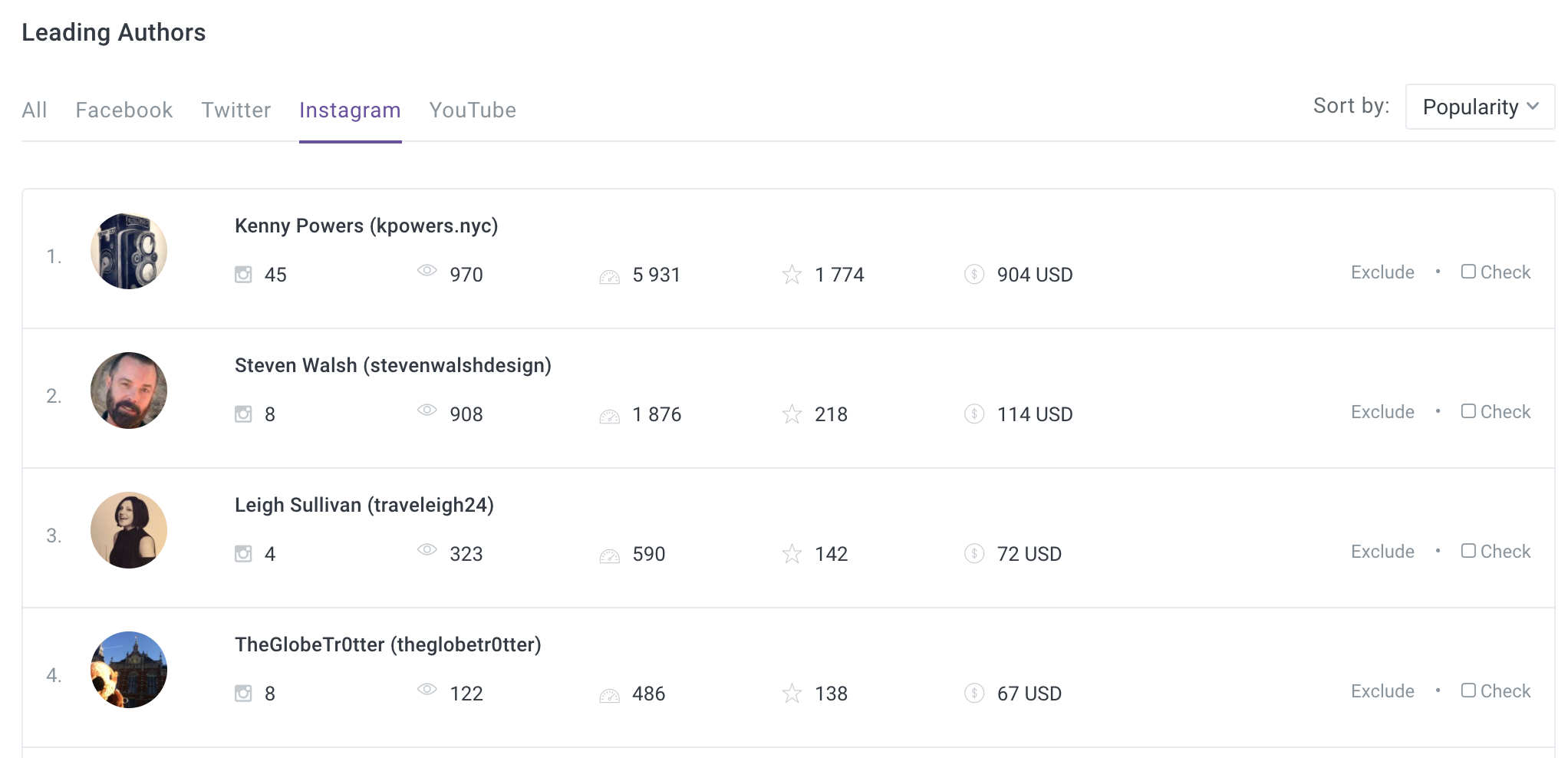
    unamo social media management tool influencers

    Here you can see that Instagrammer Kenny Powers has the greatest reach and estimated ad equivalent for his posts about Seville. Here’s one of his posts:

    social media marketing for travel agents influencer

    Just from this post, you can see that Plaza de España is a beautiful Instagram location. You can see which hashtags might be trending and follow them to see where they take you. Plus you can follow and engage with influencers like Kenny, which may lead to a collaboration or a sale.

    • Spread the word about promotions and deals.

    Put your social media accounts to good use by spreading the word about your deals and promotions. You can use any of your accounts to inform customers about deals.

    Also, it’s worth it to note that Millennial travelers are now into experience traveling. Social media marketing for travel agents can start with posts about deals, discounts, and promos. But giving your customers access to experiences provides added value and extra incentive to book a trip.

    For example, with the introduction of Trips, Airbnb added bookable experiences in 12 cities worldwide. In September 2017, the addition of experiences for New York City marked Airbnb’s entrance into its 40th market. Airbnb says that 13x more guests use experiences than home rental, the primary function of the website.
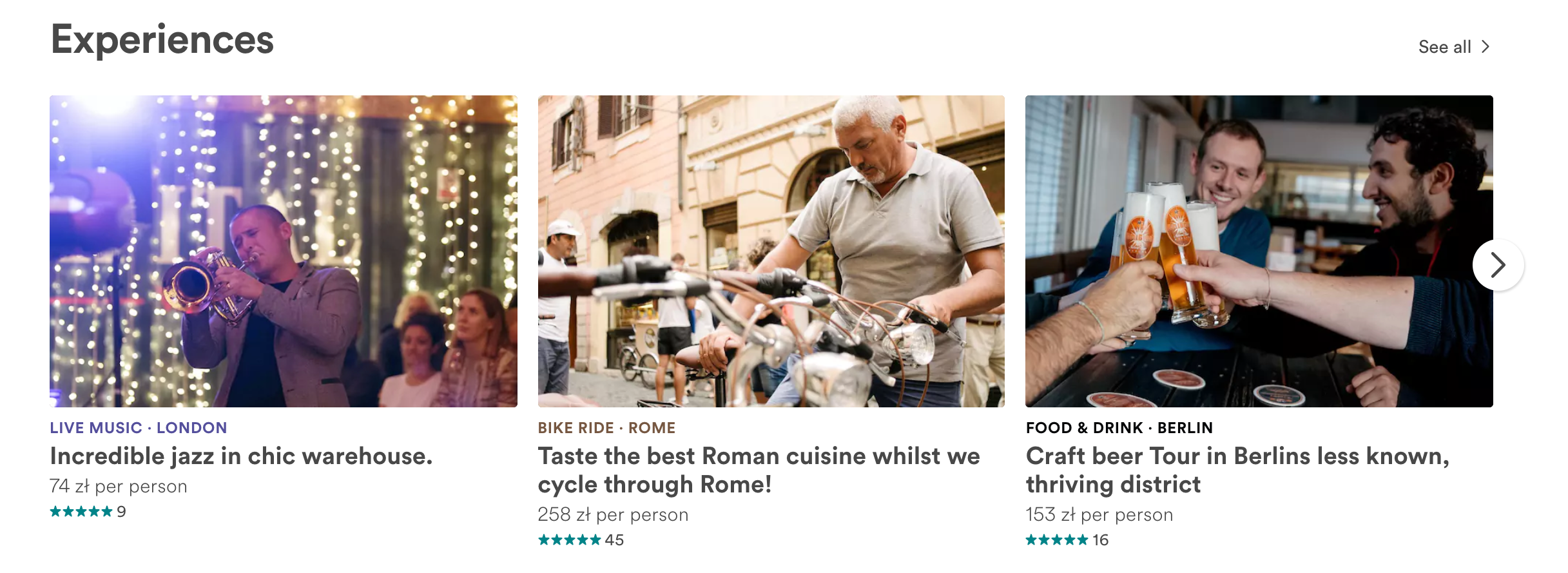
    experience as incentive for travel agents

    • Hold sweepstakes and run contests on social.

    Facebook is a great platform for conducting contests or sweepstakes. There are also some free social media marketing tools for Facebook that you can use to help you choose winners and run contests. You can also use Twitter or Instagram.

    Here’s an example of a give away that Expedia had via chat on Twitter:

    • Crowdsource images and promote user-generated content.

    User-generated content can take social media marketing for travel agents to the next level. That’s because the travel industry is perfect for user-generated content. Think about it. When do people take pictures? Well, with the advent of smartphones some people take selfies nonstop.

    But most people photograph important life events like births, weddings, and graduations. And most people still take tons of pictures on their vacations. Plus, the big influencers, such as photographer Kirsten Alana, dedicate their social accounts to nothing but travel photos.

    Instagram travel influencer

    But why would you want to retweet or share so-and-so’s vacation pictures? Research shows that Millennials (aka most consumers) trust user-generated content above all other forms of social media marketing for travel agents. Plus, 53% say user-generated content influences their purchasing decisions over traditional media or banner ads.

    But how do you put great user-generated content to good use?

    To begin, find content that you can share. You can share images, reviews, or positive feedback from customers. You don’t have to share influencer content. But you can find micro-influencers by using social media management tools.

    You can also create photo contests where your followers send you images of their vacations. The key is to give credit to the owner after featuring content on your social channels or website.

    • Push your blog content, add reviews, and curate great travel content.

    Having a blog with travel related content is a great way to generate traffic for your site and to have content to share with your fans and followers. So, let’s say you do have a blog.

    Your social media marketer (or you) and your content manager should coordinate posts. That’s why it’s a good idea to have a free workflow tool like Trello to schedule content. Social media marketing for travel agents can also involve community management and comment mitigation.

    Let’s say you don’t have a blog. You still need to share content on a regular basis across all your social media profiles. Not posting is one of the best ways to lose touch with your audience. You need to post on a regular basis and that’s hard when you don’t have content.

    One way to fill in the gaps is to curate and share related content from your industry. For example, link to travel blogs with relevant content, tips, and images. At the end of the day, all you need to do is know your audience and get creative. It’s also a good idea to check out your competition. Here are some ideas for curated content:

    • Articles on Hot Spot Locations
    • Travel Tips and Warnings
    • Packing Tips and Local Fashion
    • Travel Guides and Must See Lists
    • Unique Hotels and Accommodation
    • Bucket Lists and Dream Vacations

    You can also curate content when you do have a blog. It’s good to share or retweet excellent content that you know your audience will love. Make sure you follow content managers, travel bloggers, influencers, and industry publications.

    Pro Tip: Pinterest is a great place to create content. Social media marketing for travel agents on Pinterest starts with unique boards featuring packing tips, bucket lists, or food. Add beautiful images with great descriptions and then link back to your website or relevant, curated content.

    • Use Periscope or Facebook Live to live stream content.

    Video is where it’s at, and live streaming content is the new hot thing on Facebook. All you need is knowledge about how and when to stream and a creative idea about what to show. Here are 7 ideas for live video content:

    • Cruise Ship Tour
    • City Tour
    • Hotel Review
    • Food Experience
    • Museum Tour
    • Street Performance
    • Local Event or Festival

    Pro Tip: Before making a video, make sure you’re prepared. Write a script or scenario, check your cameras and lighting, and make sure that your team knows their roles. Live streaming is great because it shows relevant things happening now. The downside is that you can’t edit.

    Not sure how to use social media to do market research? Need tips on how to research your brand or competition? Read our guide: How to Use Social Media for Market Research

    Why You Also Need to Understand Social Media Management for Travel Agents

    Social media management and social listening is the next level of social media marketing for travel agents. Social listening involves collecting all mentions including a keyword or topical phrase and analyzing them for trends and patterns.

    You can use social media management to track your brand, research trending topics, find influencers, and get a better understanding of your audience. Let’s go back to our Seville example. Not many people are mentioning Seville in social comments:

    social media mentions spain

    But let’s say you want to run a promo on trips to Seville in 2018. How can you use your social media management tool to help you out in the meantime? Here’s a sample of the kind of information you can gather:

    • Where travelers are posting.
    • Which hashtags they’re using.
    • Who is trending as an influencer and where.
    • What the sentiment is toward the topic and why.
    • What people are saying and sharing.
    • Who you can tap for user-generated content.
    • Where commenters are located.

    For the keywords “Seville” and “travel,” we can see that most posts are coming from Facebook and Instagram. Knowing where users are posting gives you an idea of where to reach your audience.

    unamo social mention source

    Popular Instagram hashtags are #seville, #spain, #travel, and #wanderlust. Using similar hashtags gives your content greater reach. Social media marketing for travel agents on Twitter also includes finding and using popular hashtags.

    unamo social hashtag instagram influencer

    Plus, the content above is the type of user-generated content that you can share and promote. Or you can check out your list of influencers for power users across different social platforms. Again, here is our list of influencers:

    unamo social media management leading authors

    The sentiment for this topic is over 40% positive and less than 10% negative. Taking a more in-depth look, you can see that some of the negative comments are coming from unhappy customers who experienced a run in with bed bugs and bad customer service.

    unamo social mention sentiment

    Social media marketing is the first step for travel agents. But social media management and social listening activities are necessary for any business that wants to stay ahead of the game.

    Pro Tip: Loyalty points can encourage positive reviews and posts from influential users. In turn, positive posts about loyalty benefits incentivize others to join. It’s much cheaper to maintain customers than it is to find new ones. Just remember that it is illegal to force an exchange.

    Not sure how to get started with social media management? That’s okay, we’ve got you covered. Read our guide: The Complete Starter Guide to Social Media Management

    Conclusion

    While some may say that “travel agent” is a dead profession, that’s not quite true. Yes, social media and the Internet have made it easier for some to book trips solo.

    But now it’s also easier for you to find potential customers and engage with them. All you need is to do is engage in social media marketing for travel agents.

    Decide where to start, make great content, share user-generated content, and stay on top of trends. Once you find the right balance, you’ll be well on your way to giving your customers the vacations of their dreams.

  • Boolean Search Operators for Social Media Monitoring

    Boolean Search Operators for Social Media Monitoring

    Boolean search operators – what are they?

    Boolean search operators are terms that users can use within a keyword query to adjust their queries for more relevant results.

    With Unamo Social, we use a variety of boolean search operators for our users to acquire the most accurate data possible without having to enter in nine billion different search phrases.

    Given the extremely expansive amount of mentions that occur across social media channels and their growing usage and popularity, these operators are becoming less of a luxury and more of a necessity within social listening and monitoring.

    However, complex queries aren’t an ordinary thing.

    Most social media monitoring tools limit the amount of Boolean operators available to their users to just:

    • AND
    • OR
    • NOT

    This isn’t inherently bad, it’s just not allowing users to clean up their queries to get the most relevant results possible.

    On top of that, complex queries that only utilize these parameters can end up looking like this:

    Dragonsearch boolean search operator

    Nobody’s got time for that.

    Using more refined boolean operators can help parse through unwanted mentions that will ultimately:

    • Make your data more accurate
    • Save time
    • Save money

    All of these are necessary precursors to extracting data out of any social media analysis campaign – whether its for social media market research or social media management.

    After all, your data and insights are only as informative as the query is you use to get them.

    Some monitoring tools limit users on mentions or keywords in terms of pricing. Either way, having boolean search operators will help limit your keywords and maximize or limit the amount of mentions a user gets based on their needs.

    Types of Boolean Search Operators

    There are a few different boolean search operators that only a few social media monitoring tools utilize for their users.

    Quotes

    Using the double quotes “” search operator will ensure that whichever phrase is being searched for will be fetched in that order.

    For example, searching for a phrase: the dog ran in the street, will look for mentions with that phrase in that word order.

    In Unamo SMM, any search query is defaultly searched for in this way and thus the double-quotes are not necessary.

    quotes boolean search operator

    If you would want to look for certain phrases in mentions in which the word order isn’t a necessity, then you would use the “NEAR” operator, which we’ll get into later.

    Wildcard Truncation*

    Wildcard truncation boolean operators – also known as the asterisk* rule – helps to minimize the amount of search queries a user needs to enter by fetching any variation of a word after the asterisk appears.

    For example, a query that is looking for mentions about the environment could use the asterisk like this: environmen*.

    This would return any variation of the word appearing after the “n” such as:

    • Environment
    • Environments
    • Environmental
    • Environmentalist(s)
    • Environmentally

    Furthermore, unlike other tools, Unamo SMM will honor the asterisk* rule in multi-word queries.

    For example, a phrase like Sara* hous* will return results like:

    example of wildcard truncation boolean search operator

    Rather than implementing each variation of the phrase for both words, users can simply use the asterisk rule to get every variation of the mention with one keyword.

    This is especially helpful with languages in which verb pronouns are suffix dependent. Simply place the asterisk at the root prefix of the verb and the tool will fetch all the variation endings for that verb.

    This saves time, money if the business charges by keywords, and reduces the amount of unwanted data.

    Near Rule

    The “Near” boolean operator – or / rule – allows users to find words within a certain distance from the main search phrase.

    Simply enter your main keyword followed by a space and a slash and then the number of words it has to appear within the main phrase.

    Example of tilde or the near/ boolean search operator

    In our example above, “hat” is our main keyword. The following related keywords that have the “/5” must appear within 5 words of our main keyword in a mention.

    social media mention example for boolean near operator

    In our example we get “buy” coming 3 words before “hat”. This allows us to find relevant results for keywords that may have multiple contextualization.

    Some tools will use a “~” or a Tilde, however the “/” in our boolean search works the same way.

    AND

    The “AND” or “+” boolean search operator ensures that mentions appear with every word entered within a query, albeit without a specific order or distance from one another.

    In Unamo SMM this is expressed with related keywords and globally required keywords.

    example of boolean search AND operator

    With this method, you will get any mentions that feature all three of these keywords in any order and any distance from each other.

    The main keyword is “hat” and the related is “buy” which means they must appear together. The globally required keyword means it must also appear in the same mention with the main and required keyword.

    For now the AND operator is limited to three keywords. However, changes will be implemented soon to remove any limit.

    OR

    The “OR” operator allows you to specify that any one of a set of keywords can appear in a mention.

    This is done by making each individual phrase a main keyword.

    example of boolean search operator OR

    In this example, any mention featuring either hat, jean(s), or jacket(s), will appear.

    We can take this a step further and add AND operators to each phrase so that we will pick up mentions for each word with other parameters within each phrase.

    boolean search operator AND / OR required keywords for social media monitoring

    In this example, we’ll get any mention that features the word “hat” and “buy”, or “jean(s)” and “sell(s)”, or “jacket(s)” and “get(s)”.

    If you want just one universal word to appear with any of the keywords then you can add it to the globally required keywords and it will pick up any of the words in conjunction with the one universal keyword.

    one keyword appearing with 3 OR boolean search terms

    Using the “OR” search operator in this fashion allows you to expedite the process and aggregate the terms together while still maintaining a basic form of separation for quick data parsing.

    NOT

    Excluding certain words from your mentions is done via the “NOT” operator. This is a simple keyword exclusion that can be done in combination with any of the other boolean search operators.

    one main boolean search keyword and 4 OR keywords

    Here we get each required keyword under our main keyword as excluded, meaning none of them can appear within a fetched mention.

    We can set up different excluded keywords for each mention so that some main keywords will exclude certain words while other keywords (if we’re using the OR operator) will exclude different keywords.

    NOT boolean search operator example

    Excluding one keyword from any mention that includes different keyword phrases using the OR operator requires users to exclude it in the globally required section.

    NOT boolean search operator example for social media monitoring

    Wiola!

    Excluding certain words and phrases is a must for many social media managers needing to root out extraneous data.

    Using the “AND”, “OR”, and/or the “NOT” boolean operators makes it easy.

    Special Characters

    Unamo SMM allows for special characters to be included in mentions such as:

    • #Hashtags
    • @
    • Pluses+
    • Underscores_
    • &

    The hashtags need to appear at the beginning of a word, much like they do on sites like Twitter and Instagram.

    The @ symbol can appear anywhere in a phrase as most email addresses place it somewhere in the middle.

    Pluses, &, and underscores can also appear anywhere in a phrase.

    Given that a lot of digital phrases and terminology includes these symbols, it seems like a no-brainer to include them in any search.

    Authors

    You can exclude certain authors from your mention results after they have been fetched. You can also choose to exclude any keywords appearing in the author’s name.

    For example, wanting to hear about people talking about Nike would obviously want to exclude that author from any fetched mentions from all of their social profiles and frequent posting.

    Domains

    You can put in any base URL to be tracked as a mention and the root form of that URL will be fetched with the use of wildcard truncation.

    You can also exclude any domains or websites from mentions as well.

    Location

    Every topic campaign is setup within a predefined location, so only mentions within that location will appear.

    Currently in Unamo Social, you can search for mentions within The U.S.A, the U.K., or Poland.

    Conclusion

    Most businesses are unique in name or product, but there is still a ton of overlap to be reckoned with. Boolean search operators help users distinguish their products and interests with ease instead of manually excluding mentions and authors.

    Get the data you need quickly, effectively, and painlessly.

  • The Complete Starter Guide to Social Media Management

    The Complete Starter Guide to Social Media Management

    Most business understand that social media marketing is no longer optional. For others, it’s the only option. But what’s all the fuss about social media management, monitoring, and listening?

    Imagine for a minute that you could tune in to all of the public conversations related to your brand or industry online. Not just those happening on your social profiles.

    Imagine what that kind of intel could help you do.

    Tuning in to your customers’ public conversations (social media monitoring) and drawing insights from all that data (social listening) can catapult your social media marketing strategy into the stratosphere. But it’s not easy.

    That’s because you have tons of data to analyze. Essentially, you can find out everything from how customers feel about your brand to how well a particular campaign resonated with your audience. But you need the know-how.

    That’s why this article will tell you:

    • How to choose keywords for social media monitoring purposes.
    • How to use social listening to analyze the data you gather online.
    • How to track brand awareness, sentiment, and influencers.

    Great Social Media Management Starts with Monitoring

    What is social media monitoring?

    Social media monitoring is the first step in most social media management strategies. Social media monitoring is the act of compiling all mentions about a keyword, brand name, or topic that you want to track for the sake of listening to conversations related to your chosen words.

    But before you can start monitoring social media you have to make a few strategic decisions.

    First, where do you want to listen? Here’s a list of 15 possible social media platforms and other social forums where people may talk about your brand or keyword:

    • Facebook
    • Twitter
    • Instagram
    • Youtube
    • LinkedIn
    • Pinterest
    • Google+
    • Tumblr
    • Snapchat
    • Yelp
    • Reddit
    • Quora
    • Glassdoor
    • Travel Advisor
    • Foursquare

    Next, you will need to choose your keywords. Ask yourself:

    • Do I want to know what people are saying about my brand?
    • Do I want to know what people are saying about my product?
    • Do I want to know what people are saying about a particular topic?

    One more thing to take into consideration is what social media monitoring tools you’re going to use. And that’s where things get tricky. There are a ton of tools for managing social media mentions, and finding the right fit for your brand is difficult if you don’t know what you need beforehand.

    That’s why it’s important to identify which platforms you want to monitor and how you will manage your keyword strategy.

    What is social media management again? Want to brush up on the basics of social media management? Check out our guide – Social Media Management: Examples and Tips

    How to Monitor Posts for Keywords on Social Media

    Choosing keywords to monitor on social media is more difficult than it sounds. You may want to monitor mentions that contain your brand name or phrases related to a particular topic. And your choice will all depend on your end game.

    Monitoring your brand name has the benefit of allowing you to:

    • Track brand awareness and sentiment toward your brand.
    • Calculate the success or failure of campaigns and content.
    • Find ways to improve customer satisfaction with your brand.

    Monitoring a particular phrase or topic allows you to:

    • Create or curate content that will engage your audience.
    • Give you ideas for marketing campaigns that will resonate in your niche.
    • Translate the needs and wants of consumers into a better product.

    Let’s start with how to use your brand name as a keyword for social media monitoring. When you’re monitoring mentions about your brand, you only use your brand name as your main keyword, right? Not so fast. Here are a couple of other things you will want to remember:

    • Variations of Your Brand Name

    For example, our company is Unamo. We use two variations of our name for our software – Unamo SEO and Unamo Social. Using “unamo” as a keyword will guarantee that we find all mentions containing the word “unamo.”

    At the same time, we may want to monitor the variations separately to see what people are saying about our individual products. We may also want to use the variations as a way to exclude other mentions referring to the Star Wars character of the same name.

    So, to monitor our brand we would choose the following keywords:

    RIGHT

    Unamo SEO and Unamo Social

    WRONG

    Unamo

    Paying attention to variations becomes more important when you have many brands with variations under the umbrella of a single parent company. Good examples are food and beverage or FMCG companies.

    Let’s take Nestlé as an example. Nestlé is responsible for more than 2,000 brands. Without narrowing things down, you may find it difficult to tell if a person mentioning Nestlé is talking about Gerber baby food or Purina dog food.

    And then there are variations within brands. Butterfinger variations include Butterfinger Cups, Butterfinger Bites, and Butterfinger Crisp. You may want to monitor everything together, or run separate monitoring campaigns for each variation.

    • Misspellings

    When a person writes your brand name, how do they spell it? Chick Filet or Chick-Fil-A? McDonald’s, McDonalds, or MacDonalds?

    What was your favorite breakfast cereal when you were a kid? Was it Lucky Charms, Cocoa Puffs, or Fruity Pebbles? How about Froot Loops. That’s right – Froot Loops not Fruit Loops. For anyone monitoring the Froot Loops brand it would be worth it to check out mentions of Fruit Loops as well.

    Pro Tip: What if your brand name is easy to spell? Do keyword research for your brand name to find out how users search for you in Google. Often, various misspellings of the main keyword will show up in your research, and you’ll have an idea of what to monitor.

    • Your Slogan

    Let’s go back to McDonald’s. The burger chain has had various slogans over the years stretching back decades.

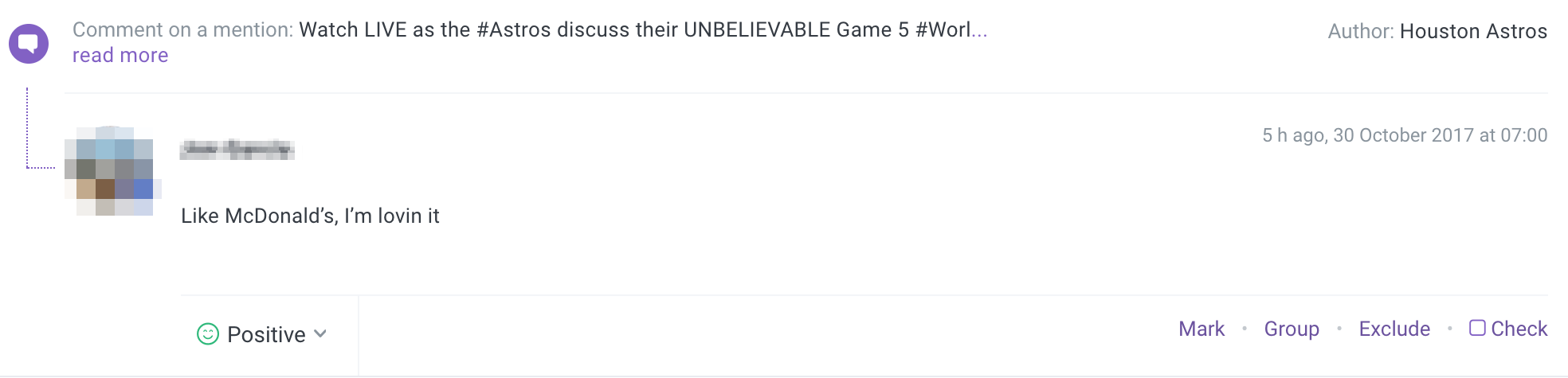
    In recent memory, the 90’s gave us – “Did somebody say McDonald’s?” The early 2000’s was – “We love to see you smile.” And now we have – “I’m lovin’ it.”

    A quick search shows that there were only six mentions with the 90’s phrase:

    social media monitoring

    But what happens when we search for the current McDonald’s catchphrase? Social media users mentioned the phrase almost 3,000 times in public posts within the last month.

    brand name social media monitoring

    But as you can see, the slogan has become a popular catchphrase to discuss all sorts of things. Like a good movie quote, “I’m lovin’ it,” no longer has much to do with McDonald’s. At the same time, McDonald’s is one of those omnipresent brands. People don’t need to talk about it much. But if you’re not McDonald’s try throwing your slogan into the mix to see what surfaces.

    • Specific Campaigns or Current Events

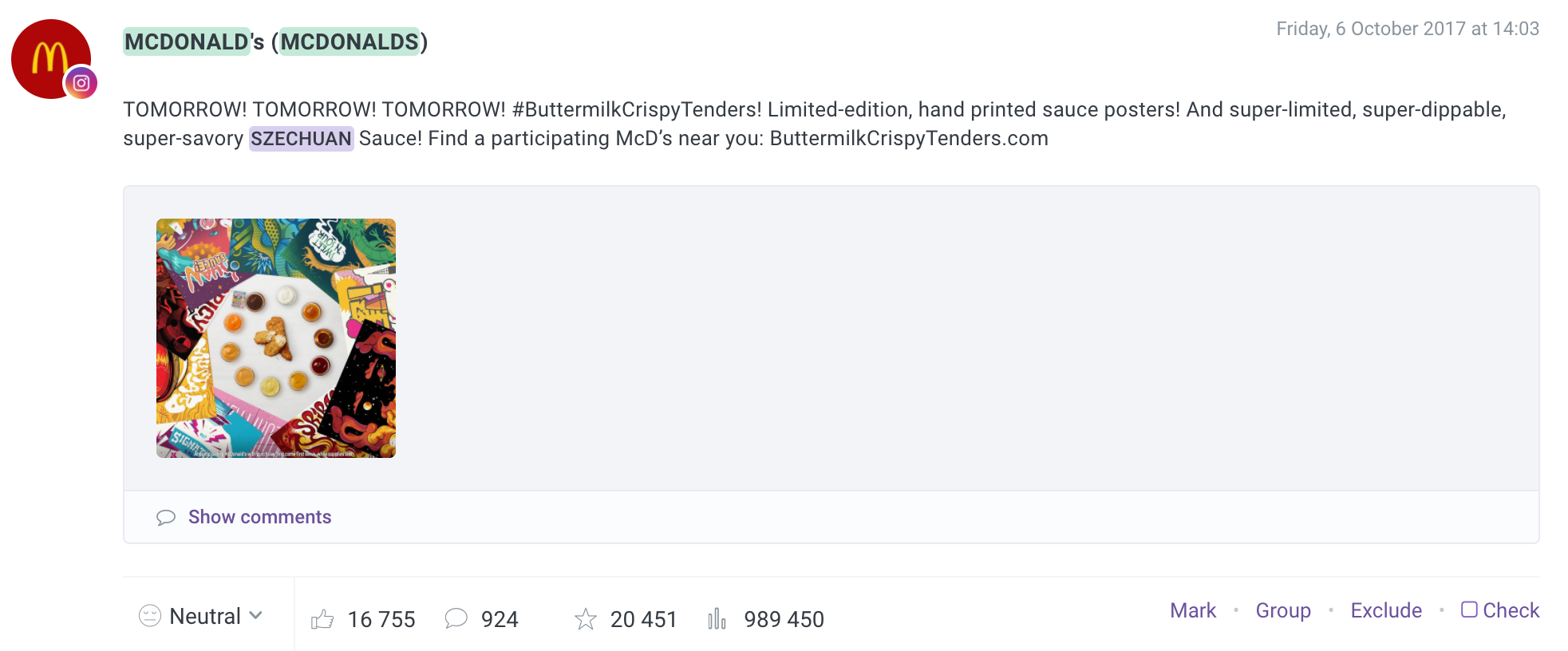
    After your brand name(s) and your slogan another thing to keep your eye on are current campaigns and events related to your brand. A great example in two words? Szechuan Sauce.

    social media marketing mcdonalds

    If you’re unaware of the current Szechuan Sauce debacle, let me give you the short version. When Disney’s Mulan came out in 1998, McDonald’s created a temporary teriyaki-based chicken nugget dipping sauce – Szechuan Sauce.

    The sauce was removed from the menu at the end of the promotion. That was the one and only time Hot Mustard Sauce was dethroned as the best nugget sauce at McDonald’s.

    Fast forward to 2017. Szechuan Sauce is referenced in the popular, adult cartoon show Rick and Morty. Rick becomes temporarily obsessed with finding a way to try the sauce one last time. The episode created a Szechuan Sauce storm on social media.

    Now, Mcdonald’s was listening. At the end of July, the creator of Rick and Morty tweeted that he received a bottle of Szechuan Sauce from McDonald’s. Then, McDonald’s tweeted that the sauce would reappear in select restaurants for one day in October 2017 creating another peak in online discussions.

    social media listening with unamo

    The entire exchange is a great example of what social media listening looks like in action. Yet, McDonald’s miscalculated its response by underestimating the demand for the sauce and the ability of an online fandom to turn into an angry mob over packets of retro Mulan sauce:

    • Real-world Equivalents

    One other thing to watch out for when using your brand name as a keyword is real-world equivalents of your brand. A great example is Apple.

    To weed out millions of social mentions about fruit, you will need to either include or exclude various words until you’re left with mentions of your brand only. For Apple, they may want to set their keywords so that the word “iPhone” must show up in mentions containing the word “Apple.”

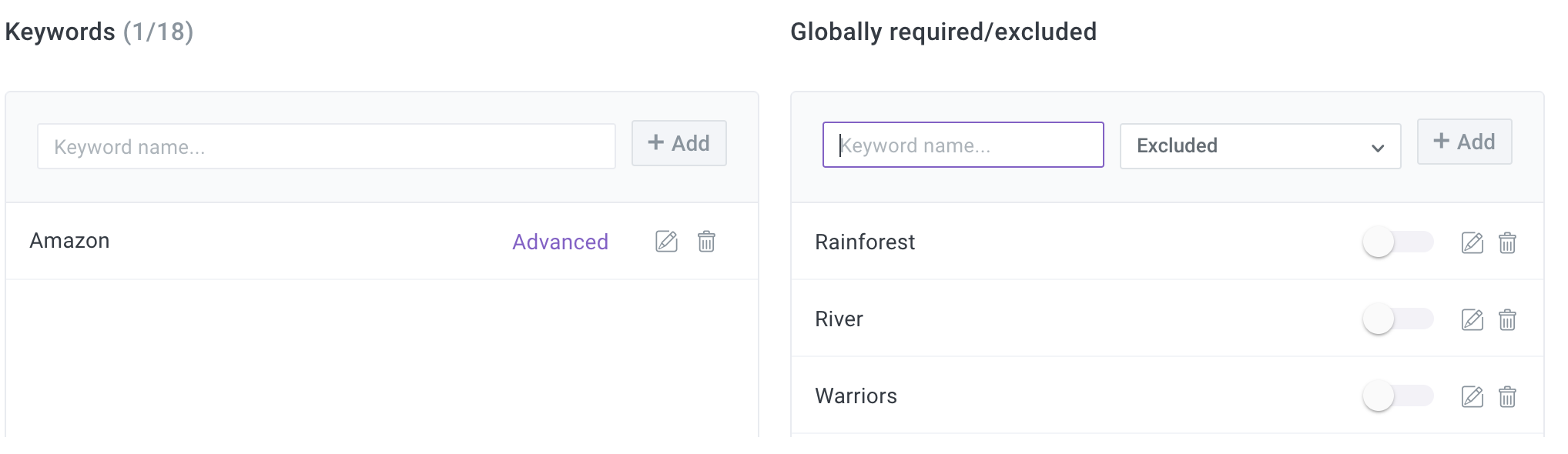
    Amazon is another great example. There’s the Amazon Rainforest, the Amazon River, and the Amazons. How can you make sure you gather social mentions about Amazon the e-retailer instead of Amazons the mythical female warriors?

    Exclude the word “warriors.” You would also want to exclude the phrases “Amazon Rainforest,” “Amazon River,” and the plural form of Amazon.

    Here’s an example of what it looks like to exclude key phrases using Unamo Social:

    social media listening keywords

    Pro Tip: Once you’ve seen what sort of social media mentions your keywords targeted, refine your search for more precise results. Don’t be afraid to play around with excluding and including various keywords until you feel you’re getting the correct mentions.

    How to Monitor Your Product or Service on Social Media

    Here’s where things may get a bit more difficult. Monitoring a proper noun like a brand name is easier than monitoring a more general product or service.

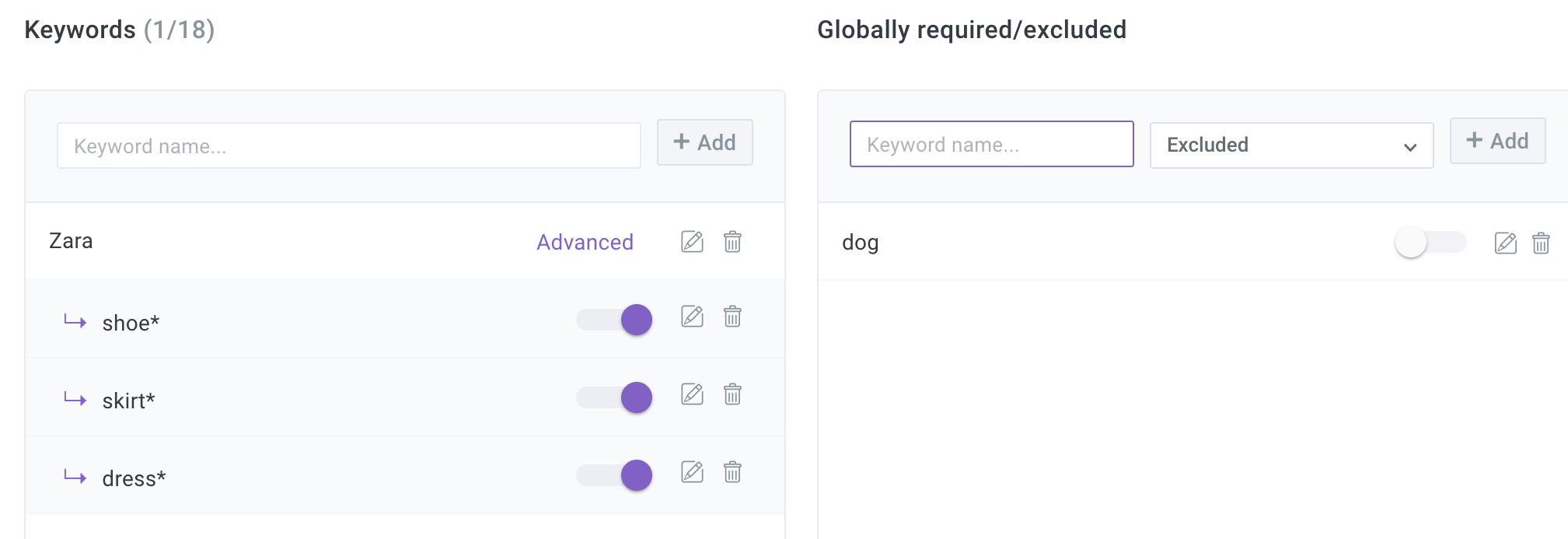
    How can you monitor “red dresses” or “paper cups” and know that they’re your red dresses and paper cups and not those of another brand? In such cases, you can always add your brand name. For example “Zara red dresses” or “Dior red dresses.”

    social media monitoring keywords

    But monitoring for a product or service works best when what you sell has a definitive, standalone name. For example, Starbucks can monitor for its brand name “Starbucks.” But it could also monitor for “pumpkin spice latte,” one of its best selling products.

    McDonald’s could monitor “Big Mac,” “chicken nuggets,” and “McFlurry,” among other things. Apple would do best to monitor by product, using keywords like “iPhone 8” or “MacBook Air.”

    The important thing to keep in mind is that every brand will have to tailor its strategy to meet its needs. There is no one-size-fits-all social media management strategy. It takes planning and a lot of trial and error before you can find a strategy that gets you the best results.

    Pro Tip: You can also monitor the names of leading individuals in your company. You may find that a person represents your brand more than a product or keyword. For example, Tesla may find it useful to monitor Elon Musk’s name alongside “Tesla” as a brand keyword.

    Social Listening – What to Do With All Those Mentions

    Once you’ve collected all the mentions out there related to your keywords, it’s time to listen.

    So, what is social media listening?

    Social media listening is looking at all the social media mentions you’ve gathered as a whole. It’s at this point where you stop monitoring individual posts like you do when you conduct customer service online.

    Instead, you start analyzing all the posts for trends and patterns that can help you make bigger moves.That’s the difference between social media listening and social media monitoring.

    Think of it like this. A long, long time ago you were in high school. During breaks, a student or teacher stood in the hall monitoring students for bad behavior – the student version was known as a “hall monitor.”

    When the hall monitor noticed that Johnny’s shoes were untied or that Karen pushed Diane, she took action. Johnny was told to tie his shoes and Karen got detention. That’s social media monitoring – handling mentions on a case-by-case basis. But what would happen if our hall monitor started listening to the students?

    Every day Karen gossiped with Heather, Tina, and Crystal about Diane and other girls. Our hall monitor listened to various conversations and found out that the mean girls had created a clique called the Denim Tigers. The Tigers spent most of their time harassing Diane’s group.

    Suddenly, the hall monitor realized that she uncovered a bigger problem than that one push in the hallway. She decided to tackle the problem with a more enduring solution than giving Karen detention. The end. That’s social media listening – analyzing all mentions to get a holistic vision.

    A Peek Into Analyzing Social Media Data Through Social Listening

    What are you supposed to do with all that data once you’ve got it all in one place? Well, that’s the million dollar question.

    One of the first things you will notice when you start to monitor keywords with a social media management tool, is that the tool comes with built in analytics. The analytics will differ depending on the tool you use, but most will help you track some of the following data:

    • The volume of mentions containing your keywords over a set period of time.
    • The demographics of the people making the comments – gender, age, location, etc…
    • The source of the mentions – limited to the social media platforms the tool targets.
    • Who the lead influencers are for your given keywords or topics.
    • A calculation of ad spend for reaching the same amount of people.

    Social listening is all about looking at this data and deciding how best to engage with your audience based on your findings. Let’s take a closer look at how to use social listening to track brand awareness and sentiment and to identify influencers in your niche.

    How to Track Brand Awareness and Sentiment

    Entering your brand name into a social media management tool is one way to quickly gauge just how aware consumers are of your brand. The higher the volume, the more people are talking about you. When you aren’t a massive household name, that’s not bad information to have.

    Plus, a lot of tools will also show you where the chatter about your brand is happening. Knowing the source of the mentions can help you do two things. First, you can continue to push what’s working on platforms where you’re already popular. Second, you can start to generate brand awareness on target platforms where there’s no activity.

    Social Media Listening Mentions by Sources

    Another cool feature is sentiment analysis. A lot of social media management tools will show you the overall “sentiment” expressed toward the keyword or topic you’re monitoring.

    That way you can find out if people are happy about your brand, product, or service. You can also find out how they feel about different topics related to your brand or industry so you know what content to feed them.

    There’s only one drawback to sentiment analysis. It’s just as difficult for machines as it is for humans to understand some sentiment. Sarcasm and irony are good examples. At times it’s best to monitor several individual posts to see what’s driving the sentiment. Here’s an example:

    Hurricane Irma Sentiment Analysis

    Notice that almost 50% of the sentiment here is “neutral.” Do you believe that most people felt “neutral” about Hurricane Irma? Well, that’s doubtful. But a neutral ranking comes from ambiguous language used to express grief and support.

    Pro Tip: You can conduct sentiment analysis on both the listening and the monitoring level. Listen to the sentiment directed toward a topic or your brand to adjust your campaigns or strategies. Monitor the sentiment of individual posts to handle direct customer service issues.

    Want to find out how to analyze sentiment to better understand your audience? Not sure how it all works? Check out our guide on social media sentiment analysis: Understanding Sentiment Analysis in Social Media Monitoring

    Identifying Influencers for a Keyword or Topic

    Influencers are the new marketing channel for a lot of brands. More companies are making an effort to find influencers who can act as brand ambassadors or “It Girls” for their brand.

    One example is Kim Kardashian-West posting an image of her stay in an Airbnb penthouse on Instagram. She also added a hashtag, giving a shout out to the brand for the stay:

    kim kardashian influencer airbnb

    The interesting point here is that while Kim Kardashian is a celebrity, her Instagram post falls into the category of influencer marketing instead of celebrity endorsement. The idea is that Kim’s followers will think that Kim uses Airbnb because she likes it, not because she was paid.

    Now, it’s obvious that recruiting Kim Kardashian as an influencer is out of reach for most brands. And it’s important to point out that having an influencer who is authentic and deeply connected to your niche is much better than connecting with a random celebrity anyway.

    That’s where social listening comes in – you can often find out who is already an influencer for a target topic through social listening. Let’s use the keyword “Zara dress” to find influencers.

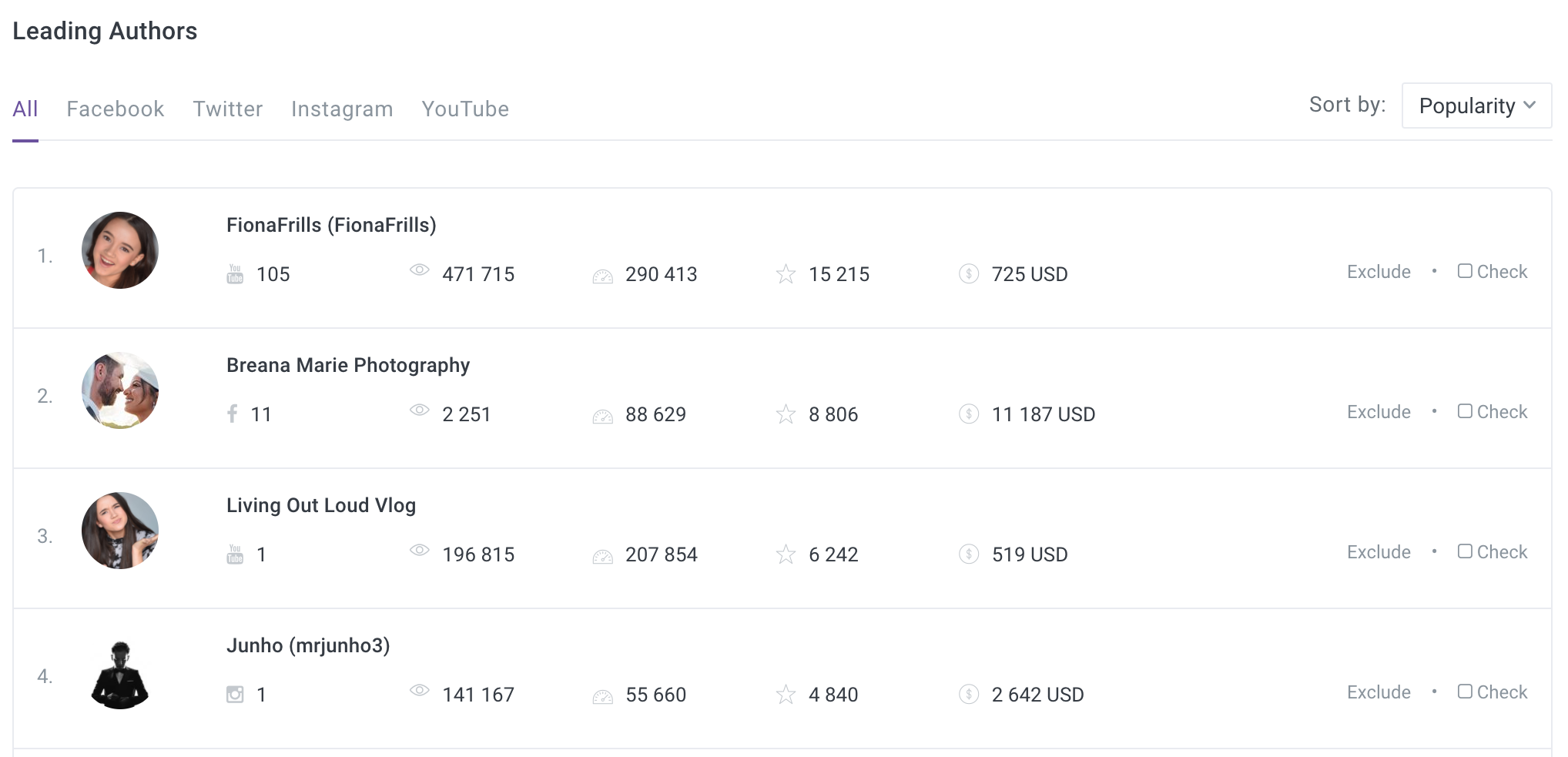
    social media influencers zara

    Fiona Frills is a beauty and fashion Youtuber with almost 500,000 subscribers and her own website. In her bio, she states that her favorite shops are Forever21 and Zara. In her videos, Fiona reviews different kinds of makeup and clothing that she picks up from trips to the mall.

    She’s the perfect example of an influencer that a beauty or fashion brand might reach out to in an effort to build an influencer/brand relationship. Some brands may even find her too big of an influencer to reach out to, preferring influencers with smaller, more dedicated followings.

    Now, one thing to keep in mind is that engaging with an influencer is about creating an authentic relationship with that person. Once you pay for an influencer to engage with your brand, you’ve bought an endorsement. Disguising endorsements as influencer relationships is illegal.

    Pro Tip: Let’s say your social media management tool has estimated ad spend as a feature. That’s a good way to calculate how much you save when engaging with an influencer instead of putting money toward an ad campaign or endorsement.

    Still hungry for more? Want to know how to use social media to conduct market research? Check out our guide: 7 Tips on How to Use Social Media for Market Research

    Conclusion

    Social media management is how you as a brand can take your social media marketing strategy to the next level. It’s no longer enough to have a dedicated customer service Twitter profile and a branded Facebook page.

    No, you need to use social listening to analyze all the conversations happening online about your brand. Otherwise, you’re missing out on all sorts of opportunities to discover what your customers want and how to improve the way your brand engages with your audience.

    Did we miss anything? Still confused about how to choose keywords for your social media monitoring campaign? Not sure how to use social listening to analyze your data? Let us know in the comments and we’ll get back to you!

  • 9 Facts That Show Videos Are Getting More Prominent in the SERPs

    9 Facts That Show Videos Are Getting More Prominent in the SERPs

    All over the web, video has become the most appetizing content. Don’t believe us? Consider this data:

    • 55% people watch videos online every single day.
    • YouTube alone counts 1 billion hours of daily video content consumption worldwide. Think how many billions of more video hours are consumed at NetFlix, Vimeo and other video hosting sites.
    • Facebook too generates a massive 8 billion video views on average per day.

    So, there you go – video is on high demand!

    Recent forecast from Cisco suggests that video content is going to eat up a whopping 80% of all internet traffic by 2019, if not already. Mobile video consumption rate is also rising by 100% every year on YouTube.

    The search engines -Google, Bing, Yahoo- are aware of our growing appetite for video content and they have put up some new features to turn the web into a world of videos!

    1. Suggested Clips Appear on the SERP page

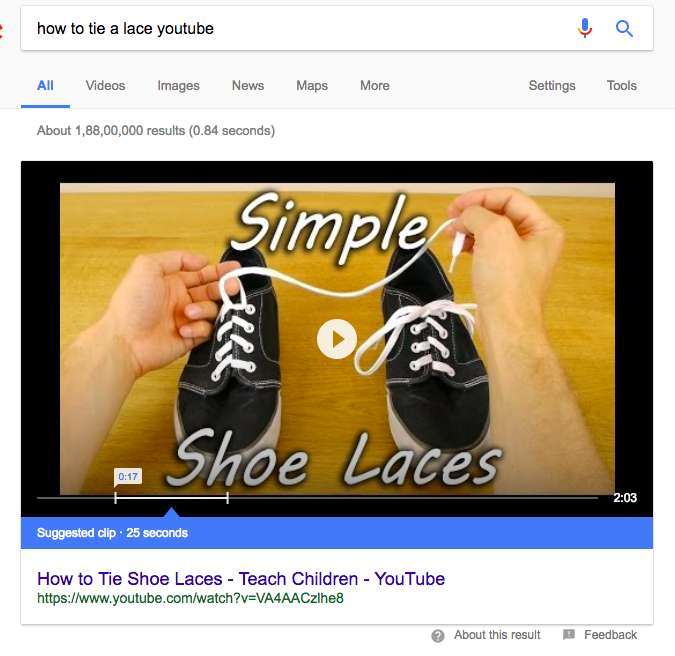
    Have you noticed it yet? Google is featuring how-to videos as “Suggested Clips” for user queries.

    These suggested clips are nothing short of amazing. Just type a popular “how-to” query in the search box (like “how to tie a lace youtube” or “how to fold a shirt video”) and Google shows you a video with the answer you are looking for.

    What’s so special about these featured snippets?

    The suggested clip can be viewed on the SERP page itself and, best of all, it directly jumps to the section of the video where you will find your answer.

    Take a look:

    (Note that not all “how-to” keyword queries will bring up the suggested clip box. Get more details on these featured snippets at Google.)

    Takeaway

    The suggested clip feature can make your “How to” content more popular by placing video results directly on the search page.

    2. Placement of video ads on Bing and Yahoo

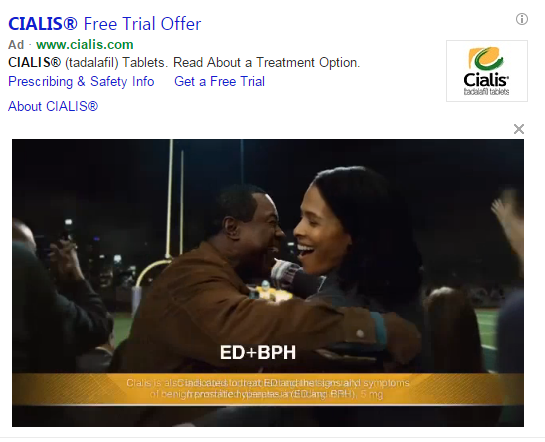
    Bing and Yahoo started placing video ads in their search results back in 2015.

    The ads contain a thumbnail with a play button. When you click on the thumbnail, the ad is expanded and it starts autoplaying.

    Source

    Takeaway

    Search engines other than Google are also placing video content in their search results offering more options to marketers. With video ads on the SERP page, marketers will have a higher chance to attract and convert their potential prospects.

    3. Google is testing a video autoplay feature in the search results

    Some users have reported autoplay videos in search results when they performed a search for movies or television shows in the browser.

    Not all users will be able to see these videos as this is a part of Google’s regular A/B testing. But it indicates Google’s vested interest in enriching the SERP page with more video results. While we are not sure if this feature will roll out permanently, it sure points out to the “preferential treatment”.

    Source

    Takeaway

    Search engines are continuously seeking to design their search results around video content. In the wake of such a dynamic scenario, it becomes crucial for marketers to understand the importance of the video SEO landscape which is continuously transforming.

    4. Facebook puts video first

    Facebook is a world in itself, with 2 billion monthly users. Founder Mark Zuckerberg has already announced that Facebook will try and compete with Google as a search engine.

    So, if we are to consider Facebook as a search engine, then here too video stands out as the most engaging format. The average video post in April 2017 captured 12.05% of the total page audience while photos and links received 11.63% and 7.81% respectively.

    Facebook is featuring its native video features more prominently. Plus, Facebook’s algorithm updates give a preferential treatment to Facebook Live. While the average engagement for a live and a non-live video doesn’t show much difference, Facebook live does perform a bit better.

    Overall, video might be your best bet with Facebook’s algorithm update.

    If the engagement rate with non-video content continues to decline, we will see Facebook push it down continually while displaying video results at the top of news feed.

    So when we think of social media as search engines, video content is still gaining prominence in this dominion but with a slight difference to the mainstream search engine giants.

    Takeaway

    Shorts videos rule on Facebook but recently there was an announcement that long-form videos will be getting priority on its news feed. That being said, Facebook still advises that the best length for your video depends on your marketing goals.

    So before you turn your Facebook video strategy around, we suggest you stick to what works for your brand.

    5. Google gives more preference to landing pages with videos

    According to a Forrester study, sites with video content are 53x more likely to rank up on the first page of the Google.

    One of the major reasons behind this magical rank boost is the “dwell time” metric that Google uses to judge webpages.

    The dwell time metric indicates a user’s engagement with your web page. The more time your users spend on your page, the more it weighs on how high a search engine will rank it..

    And what do you think is the best way to make users stay on your page? Yep, videos!

    These days the majority of SaaS or technology-enabled business services use a product video on their homepage to educate and convert visitors.

    Source

    These landing page videos encourage visitors to engage and stay on your site for more than 60 seconds ( that’s the basic length of an explainer video). And this is how adding a video can increase the dwell time on your site and optimise its ranking.

    Takeaway

    Having a video on your homepage can help you book a seat on the first page of Google. So if your landing page still doesn’t have a video, it is time you get one.

    6. Google’s Video Intelligence API can read video content (finally!)

    Google can now extract information from the videos through machine learning. Before this, search engines couldn’t understand video content and depended on the keywords and description fed by the uploader.

    Google’s new Video Intelligence API enables it to decode video content. The tool was able to identify objects in the video, matching it with related keywords.

    Source

    What does this mean for marketers?

    This video API is still in a beta period, but there’s a good chance that Google will roll out this API in its new algorithm update.

    And when that happens, your video rankings are going to change drastically. On top of the user-defined keywords and description, search engines may very well prioritise videos that include visual content matching the user’s queries.

    Takeaway

    With this feature rolling in, black hat SEO techniques may soon find their way out. If you really want your video content to bring better results, you might have to direct more efforts into your video marketing strategy.

    7. Videos drive a 157% increase in organic traffic from search engines

    Here’s another interesting case study. Apparently, videos can drive 157% more organic traffic from search engines.

    Attivio, a B2B brand experienced a traffic spike with about 200% to 300% more unique visitors to their site.

    Over a period of 18 months, the team observed a 157% increase in traffic from search engines when they started posting video content regularly. Their video content included a diverse set of video genres: product demos, customer testimonials, interviews etc.

    Takeaway

    For a manifold increase in organic traffic from search engines, you should invest in video content. Additionally, do not stick to one specific video format.

    8. YouTube video previews on mouseover to enrich browsing experience

    One more useful development is the preview feature that lets you have a sneak peek of the video content on YouTube homepage and search results. This is currently for desktop users and only for videos that are over 30 seconds long get this preview feature.

    Takeaway

    The preview helps users enrich their video browsing experience. If you are on Youtube trying to find a good video to watch, the preview feature will help you gauge its content before you hit play.

    9. Google introduced video reviews to Google maps

    Google is testing video content on Google maps. For now, the feature is available to local guides allowing them to share glimpses of hotels, landmark destinations etc.

    Searchers will be able to view these videos on their Google maps listing.

    This allows search engines to target their audience through Google maps data. Google says that using intent-based audience like this can increase ad recall by 20%.

    Image result for video reviews on google maps

    Source

    Takeaway

    Google is targeting users more effectively with video content. For now, the google maps video feature has been rolled out to local guides and might be released publically in the near future.

    Conclusion

    Whether we talk about Google or Bing or social media sites, the consumption of video content is on the rise.

    As has been pointed out by Cisco, by 2020, 80% of all internet traffic will be video content. This marks an important shift in how search engines value videos.

    Given above are a few facts that clearly depict this preferential treatment.

    In case we have missed out on something, we would love to know it from you. Leave us a comment.